Male-factor infertility can change the laboratory method, the need for sperm retrieval and even whether IVF is the first treatment to try. By the end, you will know how to read a semen report, prepare for accurate testing and compare medication, insemination, surgery, conventional IVF and ICSI with your fertility team.
Key takeaways
- Repeat an abnormal semen analysis before choosing an IVF method.
- Review medicines, heat exposure, smoking and alcohol with your clinician.
- Use IUI when motile sperm numbers support it; choose ICSI for specific sperm problems.
- Azoospermia requires testing to distinguish blocked sperm transport from impaired production.
How male-factor findings change the IVF treatment plan
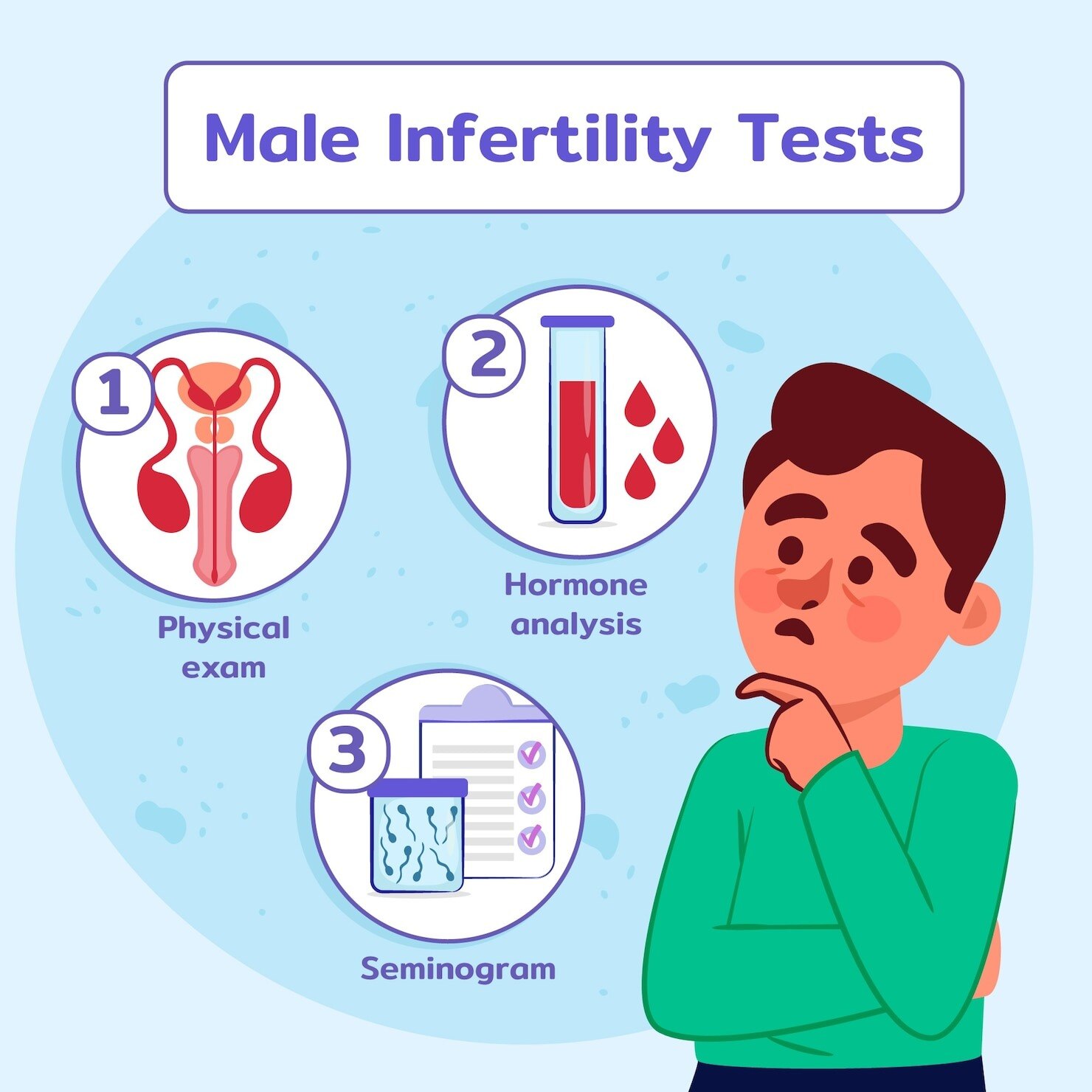
A male-factor infertility IVF plan begins with evaluating both partners, not with ovarian treatment alone. A semen analysis assesses whether sperm concentration, total count, progressive motility and morphology are adequate for conventional fertilisation. The clinician also looks for hormonal, genetic, obstructive or testicular causes because IVF does not correct the cause of poor sperm production.
- Before ovarian stimulation, the team reviews medicines, anabolic-steroid use, smoking, recent fever and severe illness. Sperm production takes about 74 days, so an exposure-related change is usually reassessed after roughly three months rather than judged immediately.
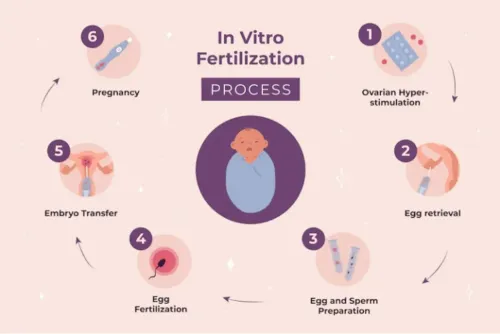
- During ovarian stimulation, treatment proceeds while the male evaluation continues. The goal is to obtain several mature eggs without assuming that more eggs will overcome severe sperm problems.
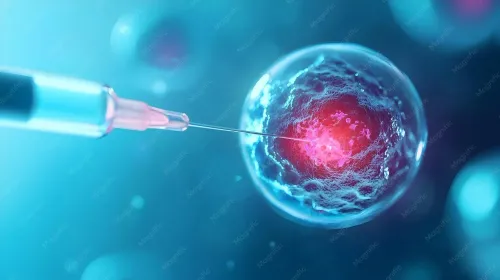
- At egg retrieval, prepared sperm are placed around each egg for conventional IVF when sperm can reach and penetrate the egg. If sperm count or motility is very low, sperm must be surgically retrieved, or fertilisation failed previously, ICSI injects one sperm directly into each mature egg.
- After fertilisation, embryologists monitor embryo development before the egg retrieval and embryo transfer stages are completed. ICSI bypasses a sperm-delivery barrier but does not eliminate genetic transmission risks.
A genetic finding can change counselling and testing: a Y-chromosome microdeletion may pass to male children, while absent vas deferens linked to CFTR requires partner carrier testing. When sperm retrieval is unlikely to succeed, discuss donor sperm and other alternatives before starting.
How to prepare for a semen analysis and read the report
A semen analysis needs a properly collected sample and a report read as a pattern, not a single pass/fail result. One abnormal result does not establish the final diagnosis because illness, fever, medication, heat exposure, incomplete collection and normal biological variation can change the numbers.
1. Follow the laboratory’s abstinence instruction, usually 2 to 7 days without ejaculation. Wash your hands and penis, collect the entire sample in the laboratory container by masturbation, and do not use saliva or lubricant. Tell the laboratory if any portion is missed.
2. Deliver the sample within the stated time, commonly 30 to 60 minutes, and keep it near body temperature during transport. Record recent fever, severe illness, anabolic-steroid use or medicines that could affect sperm production.
3.
Read the key measures together: semen volume is the fluid amount; sperm concentration is the number per millilitre; total sperm count is the number in the whole sample; progressive motility is the percentage moving forward; morphology records the percentage with a normal shape; vitality shows how many sperm are alive; white blood cells can point to inflammation or infection.
4. Repeat an abnormal test after at least one month, using the same preparation. If fever, severe illness or a major exposure affected sperm production, reassess after about three months because sperm development takes roughly 74 days.
A persistently abnormal pattern deserves a clinician’s review, even when one measure falls within the laboratory’s reference range.
When IUI, medication review or conventional IVF comes before ICSI
A mildly abnormal semen report does not automatically make ICSI the next step. Medication review, varicocele treatment or IUI for male infertility may be appropriate when usable motile sperm are present and the female partner’s fallopian tubes are open.
| Option | What happens | When it makes sense |
|---|---|---|
| Medication review | The clinician checks testosterone, steroids, heat exposure and other drugs that can suppress sperm production | Before treatment, especially when a reversible cause is suspected |
| IUI | Prepared sperm are placed inside the uterus around ovulation | Mild male-factor infertility with adequate motile sperm |
| Conventional insemination IVF | Prepared sperm are placed around retrieved eggs in the laboratory | Sperm can usually reach and penetrate eggs, and there is no previous fertilisation failure |
| Intracytoplasmic sperm injection | One sperm is injected directly into one mature egg | Very low count, poor motility, surgically retrieved sperm or earlier failed fertilisation |
Use this sequence before selecting ICSI:
- Repeat or confirm the semen findings and examine the male partner for hormonal, genetic, obstructive or testicular causes.
- Correct a reversible problem when possible. ICSI bypasses sperm entry into the egg; it does not repair the cause of infertility.
- Choose IUI or conventional insemination IVF when sperm function and the clinical situation support them. Choose intracytoplasmic sperm injection when sperm cannot reliably fertilise eggs without assistance.
Routine ICSI offers no consistent live-birth advantage when there is no male-factor indication, so ask what specific finding justifies the injection.
How azoospermia and ejaculation problems affect sperm retrieval
Absent sperm in the ejaculate does not automatically mean absent sperm production. The cause may be a blockage, impaired testicular production, or failure to release semen.
With obstructive azoospermia, sperm production can continue behind a blocked or missing vas deferens. Retrieval choices include:
- PESA: a needle removes sperm from the epididymis.
- TESA or TESE: sperm is aspirated or removed from testicular tissue.
- MESA: a microsurgical epididymal retrieval used in selected cases.
Retrieved sperm is usually used with ICSI because it may be too few or immature for standard fertilisation. The procedure depends on the obstruction, previous surgery and local expertise.
Non-obstructive azoospermia means sperm production is severely impaired. micro-TESE searches the testis under magnification and is generally preferred when surgical retrieval is attempted, but it can still find no usable sperm. Discuss donor sperm and other family-building options before surgery, not after a failed retrieval.
Ejaculation problems may allow sperm collection without testicular surgery. Doctors can address retrograde ejaculation, use medication review, induced ejaculation or electroejaculation, and sometimes recover sperm from post-ejaculatory urine.
Do not treat the retrieval result as the whole diagnosis. Karyotyping and Y-chromosome microdeletion testing are relevant in selected severe cases; CFTR testing matters with absent vas deferens or suspected obstructive disease. Genetic counselling is important because some findings can affect a male child conceived through ICSI.
External testosterone can suppress sperm production and is not a fertility treatment.
How to turn male-fertility results into a treatment decision in Ravet
Before signing consent, ask the clinic to connect each result to a specific decision, not simply label it “male factor.” Use these male infertility treatment questions during your fertility consultation in Ravet:
- Which findings are confirmed, and should semen analysis, hormones or infection tests be repeated before treatment?
- What are the FSH, LH and morning testosterone results? Explain whether testosterone and sperm production are linked in this case, and whether external testosterone must stop because it can suppress sperm production.
- Does this pattern require genetic testing for male infertility, such as karyotyping, Y-chromosome microdeletion testing or CFTR testing?
- If sperm are absent, is the cause obstruction or impaired production? For non-obstructive azoospermia, why is microdissection TESE being recommended, and what is the realistic chance of finding sperm?
- Will retrieved sperm be frozen, and will the laboratory use conventional IVF or ICSI? Ask what specific result justifies ICSI rather than routine use.
- What happens if retrieval or fertilisation fails? Discuss donor sperm and other alternatives before surgery, not after an unsuccessful procedure.
At Conceive IVF-IVF Centre, IVF Clinic in Hinjewadi, Wakad, Pune, ask for a written plan naming the tests, procedure, backup option and decision points. Bring medication records, prior semen reports and testosterone prescriptions so the team can assess reversible causes before committing to IVF.
Frequently asked questions
How do male-factor findings change the IVF treatment plan?
Semen concentration, total count, progressive motility and morphology guide whether the plan uses timed treatment, IUI, conventional IVF or ICSI. Hormonal, genetic, obstructive and testicular findings can add further evaluation or treatment.
How should you prepare for a semen analysis?
Follow the clinic’s recommended abstinence period, collect the complete sample in the provided sterile container, avoid lubricant unless the clinic supplies a sperm-safe product, and deliver the sample within the stated time and temperature instructions.
When does IUI or conventional IVF come before ICSI?
IUI may be considered when enough motile sperm are available after processing. Medication review or treatment of an underlying issue comes first when it can improve fertility. Conventional IVF may be suitable when sperm can fertilise eggs without direct injection.
How does azoospermia affect sperm retrieval?
Testing must distinguish obstructive azoospermia, where sperm production continues but transport is blocked, from non-obstructive azoospermia, where production is impaired. The result influences hormonal or genetic testing, surgical correction and whether sperm retrieval is attempted.
How do you turn male-fertility results into a treatment decision in Ravet?
Take both partners’ test results, medical history and treatment goals to a fertility consultation. Ask which findings are reversible, whether a repeat semen analysis is needed, what fertilisation method is recommended and when sperm retrieval or genetic counselling applies.