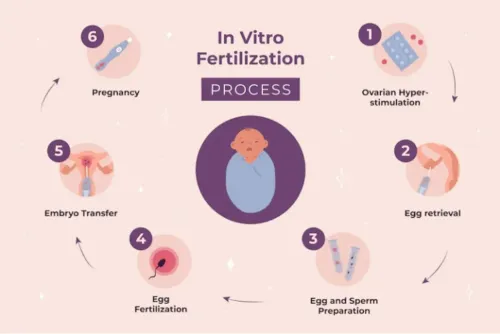
Infertility care and maternity care solve different problems, but pregnancy after fertility treatment often requires a planned transfer between them. By the end, you will know which specialist to contact, when a maternity or high-risk pregnancy centre is appropriate, what to verify in Ravet, and which symptoms require emergency hospital care.
Key takeaways
- Seek fertility evaluation after 12 months, or after 6 months if you are 35 or older.
- Choose coordinated care when IVF, recurrent miscarriage, or medical conditions raise pregnancy risks.
- Request a written handover from your fertility specialist before starting antenatal appointments.
- Go to emergency care for heavy bleeding, severe pain, fainting, breathlessness, or seizures.
Which specialist do you need before and after conception?
Before conception, see a fertility specialist when pregnancy has not occurred after 12 months of regular unprotected intercourse, or after 6 months if the woman is 35 or older. Do not wait if she is over 40, has irregular or absent periods, suspected tubal disease, endometriosis, recurrent miscarriage, or a known male-factor concern.
The first assessment must include both partners: semen analysis is as important as ovulation, ovarian, uterine, and tubal evaluation. Focusing only on female infertility can delay the correct treatment.
| Specialist | Main role | When to choose it |
|---|---|---|
| Fertility or IVF clinic | Investigates infertility and offers ovulation treatment, insemination, or IVF | Before pregnancy, when conception is difficult |
| General gynaecology practice | Treats menstrual, pelvic, contraceptive, and routine reproductive concerns | When you need gynaecological care without a specialised infertility or delivery service |
| Maternity hospital | Provides antenatal monitoring, labour planning, delivery, and postnatal care | After pregnancy is confirmed |
| High-risk pregnancy centre | Provides closer surveillance and specialist referral for medical or obstetric complications | When pregnancy involves factors requiring more supervision |
Once pregnancy is confirmed, an obstetrician takes responsibility for antenatal care. When searching maternity centre Ravet, confirm that it provides pregnancy monitoring, delivery, newborn and postnatal care; a fertility clinic is not the first destination for labour planning.
Choose high-risk care when conditions such as significant hypertension, diabetes, multiple pregnancy, previous uterine surgery, or serious pregnancy complications require closer supervision.
When does infertility history make pregnancy care higher risk?
Arrange obstetric review early for a high-risk pregnancy after IVF or frozen embryo transfer, especially when other medical or obstetric risks are present. Do not wait for routine antenatal booking if you have any of these histories:
1. Before treatment, the fertility specialist should assess ovulation, ovarian reserve when relevant, uterine structure, tubal patency, age, and semen findings. AMH estimates ovarian response to stimulation; it does not reliably predict natural-conception or live-birth chances.
IVF is not automatically the first treatment: depending on the findings, options include ovulation induction, intrauterine insemination, selected surgery, or IVF.
2. If you are pregnant or planning pregnancy, request early obstetric or high-risk pregnancy review after recurrent miscarriage, an ectopic pregnancy history, severe endometriosis, uterine fibroids or cavity abnormalities, previous uterine surgery, significant thyroid disease, diabetes, hypertension, or a multiple pregnancy.
Transferring more than one embryo raises the chance of twins or more, increasing risks such as preterm birth.
3. Plan birth from the actual pregnancy findings, not from IVF alone. IVF does not automatically require a caesarean delivery; placenta location, fetal presentation, previous surgery, maternal or fetal condition, and twins or more determine the safest plan. Choose a maternity service able to monitor these risks and escalate care when needed.
What happens when fertility treatment becomes antenatal care?
A positive pregnancy test starts a handoff, not the end of fertility care. The fertility team should explain the result, identify medicines to continue or review, state when the first ultrasound is due, and give a specific date for starting antenatal care with an obstetrician.
The receiving service needs the embryo-transfer date, estimated gestational age, number of embryos transferred, early scan findings, and risks from multiple pregnancy or previous treatment.
| Service | Main role | Confirm before transfer |
|---|---|---|
| Fertility clinic | Conception and early IVF pregnancy monitoring | Records, medicines and scan plan |
| Maternity centre | Antenatal care, delivery, postnatal and newborn care | Obstetrician and maternity ward |
| High-risk service | Closer supervision and complication management | On-site care or named referral hospital |
Before choosing a centre, ask:
- Is a named obstetrician responsible, with scheduled antenatal visits?
- Are ultrasound and fetal medicine referrals available?
- Is anaesthesia support available during delivery or emergencies?
- Does the maternity ward provide newborn resuscitation and neonatal care?
- Is there blood-bank access and a 24-hour emergency pathway?
- Does it manage high-risk pregnancies on site, or transfer them elsewhere?
- Does it provide delivery, postnatal and newborn services?
Do not assume a fertility clinic provides maternity care. If the fertility and obstetric teams work at different facilities, confirm who sends reports, who reviews medicines and scans, and whom you contact urgently. Ask for a written transfer summary before the first obstetric appointment.
How should you compare Ravet facilities and coordinate appointments?
Choose by capability and handoff plan, not by the label “maternity centre in Ravet.” A fertility clinic versus maternity hospital comparison should show who provides care before conception, during labour, and after birth.
| Option | Main role | Verify before booking |
|---|---|---|
| Fertility clinic | Infertility assessment and ART treatment | ART registration India, consent records, grievance procedure, laboratory and ultrasound access |
| Maternity hospital | Antenatal care, delivery and postnatal care | Obstetrician availability during labour, newborn resuscitation, neonatal unit, blood bank |
| General gynaecology practice | Routine gynaecology and uncomplicated antenatal review | Referral access for IVF, fetal medicine, emergencies and high-risk pregnancy |
| High-risk pregnancy centre | Medical, obstetric or multiple-pregnancy supervision | Escalation protocol, specialist coverage and destination hospital for advanced neonatal care |
Compare continuity of care, appointment frequency, travel time, laboratory and ultrasound access, emergency transport, and total out-of-pocket effort. Ask who answers urgent calls, whether an obstetrician is physically present during labour, and where a baby needing higher-level neonatal care will go.
Conceive IVF-IVF Centre, IVF Clinic in Hinjewadi, Wakad, Pune is one fertility-care option serving people in and around Ravet; verify separately that your chosen maternity provider offers the required obstetric and emergency services.
Carry these records to every team:
- Semen analysis, AMH or antral-follicle count, ultrasound and tubal-patency reports
- Operative notes, IVF medicines, stimulation and egg-retrieval details
- Embryo-transfer date, embryos transferred, and all early-pregnancy scans
Ask how records move between teams and who owns follow-up after a positive test.
Related service
Female Infertility Treatment Centre inRavet,Punawale,Somatane Phata,PCMC,Pune Conceive IVF,Fertility And Test Tube Baby Center is the Best Female Infertility Treatment Centre in Ravet,Punawale,Kiwale,Somatane Phata,Gahunje,PCMC... |
Which symptoms need emergency care instead of a scheduled consultation?
Go to a hospital immediately for heavy vaginal bleeding, severe one-sided abdominal pain, fainting, breathlessness, persistent vomiting, severe abdominal swelling or pain, fever, or reduced urination. Suspected ectopic pregnancy after a positive test or fertility treatment is an obstetric emergency.
After ovarian stimulation or egg retrieval, these symptoms can signal ovarian hyperstimulation syndrome, bleeding, infection, ovarian torsion, or ectopic pregnancy. A scheduled fertility or maternity consultation is unsafe when symptoms are severe, rapidly worsening, or accompanied by collapse.
| Symptom or situation | Action | Possible concern |
|---|---|---|
| Heavy vaginal bleeding or fainting | Call local emergency services or go to hospital | Bleeding, miscarriage, or ectopic pregnancy |
| Severe one-sided abdominal pain | Seek immediate hospital assessment | Ectopic pregnancy or ovarian torsion |
| Breathlessness, persistent vomiting, severe swelling, or reduced urination | Go to emergency care now | Ovarian hyperstimulation syndrome |
| Fever after retrieval, or worsening pain | Request urgent assessment | Infection or internal bleeding |
| Reduced or absent fetal movement | Contact the maternity unit urgently | Fetal compromise |
During pregnancy, do not wait for the next antenatal visit when fetal movement reduces or stops. Take identification, your medication list, fertility-treatment records, pregnancy-test results, and scan reports. Use fertility care to investigate or achieve pregnancy, maternity care to monitor and deliver it, and emergency hospital care when symptoms cannot safely wait.
Frequently asked questions
Which specialist do you need before and after conception?
Before conception, consult a fertility specialist for infertility assessment and treatment. After conception, arrange antenatal care with an obstetrician; a maternal-fetal medicine specialist may be needed for significant medical or pregnancy risks.
When does infertility history make pregnancy care higher risk?
Plan closer coordination when pregnancy follows IVF or another assisted-reproduction treatment, or when you have recurrent miscarriage, endometriosis, tubal disease, age-related risks, or conditions such as hypertension or diabetes.
What happens when fertility treatment becomes antenatal care?
Your fertility team confirms pregnancy location and development, reviews medicines and treatment records, and transfers care to an obstetrician. Ask for the treatment summary, embryo-transfer details, medications, test results, and recommended follow-up schedule.
How should you compare Ravet facilities and coordinate appointments?
Check whether the facility provides obstetric care, ultrasound access, emergency support, delivery services, and referral pathways. Confirm who will manage your case after a positive test and how quickly appointments are available.
Which symptoms need emergency care instead of a scheduled consultation?
Seek urgent care for heavy vaginal bleeding, severe or one-sided abdominal pain, shoulder-tip pain with weakness, fainting, seizures, severe breathlessness, chest pain, or a high fever. Do not wait for a routine appointment.