A centre described as a maternity facility may offer routine antenatal care and delivery services, fertility counselling, assisted reproduction, or only some of these. You need to identify the care available, prepare for an informed fertility assessment, compare treatment choices and know what support to expect before committing time, money or medical treatment.
Key takeaways
- Confirm whether the centre provides infertility evaluation, IVF coordination, delivery or referrals.
- Bring medical records, medication details, previous treatment reports and your questions.
- Compare less invasive options, timelines, risks and costs before choosing IVF.
- Ask how success rates are calculated and request itemised costs and written consent forms.
What does a maternity centre in Ravet provide for fertility concerns?
A maternity centre in Ravet may provide pregnancy care, fertility services, or only counselling and referrals. Confirm whether it offers antenatal appointments, labour and delivery, postpartum care, infertility evaluation, IVF coordination, or antenatal care Ravet services through another hospital.
| Service | What it covers | What to confirm |
|---|---|---|
| Routine maternity care | Antenatal visits, labour, delivery and postpartum follow-up | Delivery location, emergency cover and newborn services |
| Fertility care | Infertility evaluation, treatment planning and IVF coordination | Whether both partners are assessed and procedures occur onsite |
| Counselling or referral | Fertility counselling, emotional support and specialist referrals | Which tests, doctors and hospitals handle the next step |
Counselling alone is reasonable when you need help understanding options, coping with a diagnosis, discussing donor treatment or deciding whether to pursue treatment. Request an infertility evaluation after 12 months of regular, unprotected intercourse without pregnancy.
Ask for assessment sooner if you are over 35, have irregular or absent periods, suspected endometriosis or tubal disease, previous pelvic surgery, recurrent miscarriage or a known male-factor risk; request a reproductive endocrinology review when the diagnosis is complex or treatment has failed.
Assessment should consider both partners, including ovulation, uterine anatomy, tubal patency and semen analysis. AMH, antral follicle count and day-2-to-4 FSH mainly predict response to stimulation, not natural conception or guaranteed IVF success.
Contact the medical team promptly for severe pelvic pain, heavy bleeding, fever, breathlessness or rapid abdominal swelling during treatment.
What happens at a fertility counselling appointment, and what should you bring?
Bring your partner if possible; infertility affects both people, and testing both in parallel prevents missed male-factor or female-factor causes. You may also bring a support person, but ask the clinic about privacy rules.
A fertility counselling appointment usually reviews your history, explains the fertility assessment, and records questions for follow-up by phone, email or a scheduled review.
1. Prepare dates of your last six to twelve periods, cycle length, ovulation signs, pregnancy and miscarriage history, age, fertility goals, medical conditions, allergies, operations and current medicines or supplements.
2. Bring prior semen analysis reports, AMH or other ovarian reserve testing, antral follicle count and other ultrasound scans, operative notes, previous IVF records, and genetic or donor-conception information. Include treatment dates and outcomes.
3. Expect the clinician to assess both partners: reproductive and menstrual history, age, fertility goals, semen analysis, ovarian reserve testing, uterine anatomy, tubal patency and relevant medical history. An abnormal semen analysis is commonly repeated because results vary between samples.
4. Ask what each result means before agreeing to treatment. AMH, antral follicle count and day-2-to-4 FSH mainly predict response to stimulation; they do not by themselves predict natural conception or guarantee IVF success. Age, diagnosis, sperm factors and previous treatment also affect prognosis.
5. Before leaving, confirm the next test, who will review results, when follow-up happens, and which questions need written answers. Psychological counselling supports medical care; it does not replace investigation of biological causes.
How should you compare fertility treatment options before choosing IVF?
IVF is not automatically the first treatment. A counsellor should connect your diagnosis, age, ovarian reserve, sperm results, tubal status and prognosis to a plan, then explain the chance of live birth, expected cycles, cost exposure and stopping points.
| Option | Medication and monitoring | Procedure, time and risks |
|---|---|---|
| Expectant management | None; track cycles | No procedure; lowest cost, but time may reduce age-related chances |
| Timed intercourse | Ovulation tracking, with or without medication | Home-based; low cost and limited treatment risk |
| Ovulation induction | Letrozole or clomiphene with ultrasound monitoring | Timed intercourse or IUI; lower cost, with multiple-pregnancy risk |
| IUI | Ovulation medication and monitoring | Washed sperm placed in the uterus; less invasive and cheaper than IVF versus IUI, but lower control over fertilisation |
| Surgery | Depends on the finding; monitoring follows recovery | Treats selected tubal, endometriosis or uterine problems; anaesthetic, adhesion and recurrence risks |
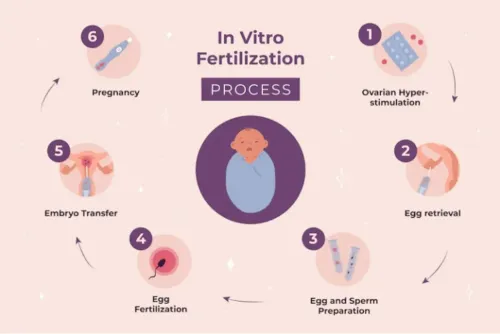
| IVF | Injectable stimulation, blood tests and ultrasounds | Egg retrieval, laboratory fertilisation and embryo transfer; higher cost, time and procedural risk |
Blocked tubes usually move treatment toward surgery or IVF; ovulatory disorders may respond first to ovulation induction. Endometriosis, fibroids or polyps require individual assessment, while severe male-factor infertility may favour IVF with ICSI. Ask about expectant management when prognosis is favourable.
Discuss donor gametes counselling, genetic counselling and fertility preservation before treatment if sperm or eggs may be unavailable later. IVF risks include ovarian hyperstimulation syndrome, bleeding, infection and multiple pregnancy; single-embryo transfer reduces twin and higher-order pregnancy risks.
Before paying for an add-on or preimplantation genetic testing, ask whether it improves live birth, what trials support it, and its extra cost or harm. A euploid result is not a guarantee of a healthy baby.
What should you verify about IVF success rates, safety, cost and consent?
Treat IVF success rates as estimates, not promises. Ask exactly what each figure measures.
| Measure | What it means | What to verify |
|---|---|---|
| Per-transfer pregnancy rate | Pregnancies after each embryo transfer | Fresh and frozen transfers, and pregnancy definition |
| Per-cycle result | Outcome after one retrieval and its treatment cycle | Whether cancelled cycles and all transfers are counted |
| Cumulative live-birth probability | Chance of a live birth across planned cycles or transfers | Number of cycles, follow-up period and live-birth definition |
Your personal prognosis depends on age, diagnosis, ovarian reserve, sperm quality, embryo stage and chromosomal factors. AMH and antral follicle count help predict stimulation response, not a guaranteed pregnancy; egg chromosomal competence also declines with age.
Ask the clinic:
- What laboratory quality controls cover embryo identification, witnessing, culture and cryostorage?
- What is the policy on fresh transfer, frozen transfer and single embryo transfer?
- How long is embryo storage, what are the storage fees, and what happens after non-payment or clinic closure?
- What donor sperm or egg programmes are available, and what screening applies?
- When can treatment be cancelled, and are medicines or procedures refunded?
- Who provides emergency support for severe pain, breathlessness or rapid swelling?
- What is the plan after a failed cycle, and when will it be reviewed?
- Does each add-on or genetic test improve live birth, or only implantation or laboratory results?
Request an IVF treatment cost sheet separating counselling, consultation, medicines, monitoring, retrieval, laboratory work, transfer, embryo storage and add-ons.
Sign consent only after risks, alternatives, privacy safeguards, documented decisions and embryo disposition are clear. You can ask for time, decline an add-on and receive copies of signed forms.
What ongoing counselling support should you expect from a fertility centre in Ravet?
A fertility centre should offer support across decisions, not just one consultation. Fertility counselling explains diagnosis, prognosis, alternatives, likely cycles, costs, risks and stopping treatment; psychological counselling for infertility addresses distress through anxiety screening and referral for individual or couple therapy. Genetic counselling covers inherited conditions, donor gametes and testing.
Consent counselling covers embryos, storage, disposition and failed treatment; financial guidance covers fees and payment stages.
Ask what happens after miscarriage, a failed cycle or treatment discontinuation, and who contacts you. Confirm confidentiality, records access, disclosure to children in donor-conception families, and help handling family pressure. Respectful LGBTQ+ fertility care, single-parent pathways, male-factor infertility and religious or cultural preferences should be routine. Counselling should not imply that stress caused infertility.
1. Confirm appointment availability, language support and teleconsultation fertility clinic options. Ask how often monitoring occurs, whether travel from Ravet is required, who reviews results, and whom you can contact between visits.
2. Request a written plan covering follow-up dates, emergency contact procedures, expected treatment duration and the likely time and travel commitment. This is the practical standard for fertility counselling support in Ravet.
3. Ask whether support continues after pregnancy loss or an unsuccessful cycle, and whether referrals go to licensed mental-health professionals.
4. Before choosing Conceive IVF-IVF Centre, IVF Clinic in Hinjewadi, Wakad, Pune, verify that it offers fertility counselling and assisted reproduction rather than routine antenatal, delivery or postpartum maternity care. Obtain written fees, payment stages and contact procedures.
Related service
IVF Counselling Centre in Ravet,Punawale,Somatane Phata,PCMC,Pune IVF Counselling Centre in Ravet,Punawale,Somatane Phata,PCMC,Pune ₹1000 Conceive IVF,Fertility And Test Tube Baby Center is the Best IVF Counselling Centre in Ravet,Punawale,Kiwale,Somatane Phata,Gahunje,PCMC and Pune. |
Frequently asked questions
What does a maternity centre in Ravet provide for fertility concerns?
Services vary. Confirm whether the centre offers infertility evaluation, fertility counselling, IVF coordination, antenatal care, delivery, postpartum care or referrals to another hospital.
What happens at a fertility counselling appointment, and what should you bring?
The appointment usually reviews your fertility history, health conditions, medications, previous reports and treatment goals. Bring both partners’ medical records, scan reports, semen analysis results, prescriptions and a written list of questions.
How should you compare fertility treatment options before choosing IVF?
Compare the diagnosis, expected timeline, invasiveness, medication burden, risks, monitoring requirements and total cost of options such as timed intercourse, ovulation induction, IUI and IVF.
What should you verify about IVF success rates, safety, cost and consent?
Ask whether success rates are reported per embryo transfer or treatment cycle, which age groups they cover, what complications are discussed, what the itemised cost includes and which consent forms you must sign.
What ongoing counselling support should you expect from a fertility centre in Ravet?
Ask whether support includes treatment decision-making, medication guidance, emotional counselling, failed-cycle review, pregnancy testing instructions, referral pathways and communication with your partner or support person.