IVF involves more than arranging an egg retrieval and waiting for a pregnancy test. A pregnancy doctor helps connect the medical history, treatment decisions, medicines and early-pregnancy checks so that you know what happens next and when a decision needs more evidence. By the end, you will know what to prepare, what to ask and how care should change after a positive result.
Key takeaways
- IVF starts with infertility evaluation, not an automatic treatment recommendation.
- Ask how scans, hormone tests and medication doses will guide each IVF step.
- Confirm who coordinates egg retrieval, embryo decisions and transfer timing.
- After a positive test, ask when blood tests, scans and pregnancy care begin.
What the doctor checks before recommending IVF
An IVF consultation determines whether IVF fits your cause of infertility; it is not an automatic first step. A pregnancy doctor builds an individualized plan from your history, examination and test results.
1. The doctor records your fertility history: time trying to conceive, menstrual length and regularity, ovulation symptoms, previous pregnancies and miscarriages, ectopic pregnancy, deliveries and fertility treatments. They ask about endometriosis, polycystic ovary syndrome, fibroids, thyroid disease, diabetes, hypertension and previous pelvic surgery. Give them every medicine and supplement you take.
2. The assessment includes the male partner’s medical and reproductive history and a semen analysis. Depending on your circumstances, it may also include ovulation testing, ovarian-reserve assessment and tubal assessment. The cause matters: tubal disease, ovulatory disorders, endometriosis, unexplained infertility and male-factor infertility do not require identical work-ups.
3. Age affects both egg number and egg quality, so the doctor should explain your prognosis rather than quote one clinic-wide success rate. Ask whether figures are calculated per egg retrieval, fresh transfer, frozen transfer or complete treatment cycle, and whether they describe pregnancy or live birth.
The fertility specialist assesses causes and coordinates treatment; the IVF clinician manages stimulation and clinical decisions, while the embryology laboratory reports embryo development and makes laboratory observations. A gynaecologist or obstetrician manages pregnancy care after a planned handover. Ask who has final responsibility for laboratory choices and antenatal decisions.
How the first visit becomes a monitored treatment plan
Make the first IVF appointment useful by bringing complete records, not expecting a prescription within minutes. The visit length depends on your history, examination and documents, so reserve enough time for questions.
- Prior ultrasound reports
- Semen-analysis results and hormone tests
- Operative notes and discharge summaries
- Miscarriage or ectopic-pregnancy records
- Current medication and supplement lists
- Details of previous IVF cycles
Ask which tests remain, what each result could change, who to contact outside office hours, and the likely timeline and total number of visits.
| Decision | Wait until | What may change |
|---|---|---|
| Treatment protocol and stimulation dose | History and test results are reviewed | Dose, monitoring frequency or safety plan |
| Fresh or frozen transfer | Hormone levels, endometrium and ovarian response are assessed | Transfer timing or cancellation |
| Add-ons | Evidence and personal indication are discussed | Whether the treatment is recommended at all |
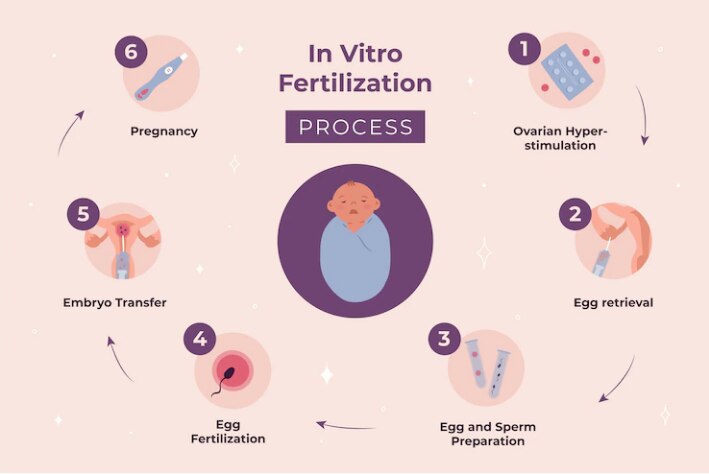
During IVF monitoring, the doctor coordinates transvaginal ultrasound and hormone blood tests to measure follicle number and growth, endometrial thickness and ovarian response. Doses can change or stop when response raises the risk of ovarian hyperstimulation syndrome, especially with polycystic ovaries or high response.
Get written instructions for injection technique, timing, storage, missed doses and common side effects.
Report rapid abdominal swelling, severe pain, persistent vomiting, breathlessness, faintness or reduced urine urgently; severe OHSS can cause fluid shifts, clots, kidney problems and hospitalisation.
How the doctor coordinates retrieval, embryos and transfer
Follicle monitoring starts with transvaginal ultrasound and hormone blood tests. The fertility doctor adjusts stimulation medicines, gives the trigger instruction at a precise time, and coordinates egg retrieval. Retrieved eggs are fertilised, then followed through embryo culture until transfer or freezing; a pregnancy test follows transfer on the clinic’s stated date.
The embryology laboratory records fertilisation, cell division and embryo development, then reports embryo grading. Grades describe features such as cell number, symmetry and the appearance of the inner cell mass and trophectoderm; they rank embryos, but do not guarantee implantation or a healthy birth. Ask who makes each clinical and laboratory decision.
| Approach | Timing and endometrial preparation | Why it may fit |
|---|---|---|
| Fresh embryo transfer | Transfer in the same stimulation cycle after retrieval; the endometrium is prepared during stimulation | Hormone levels and ovarian response remain suitable |
| Frozen embryo transfer | Transfer later, after natural-cycle monitoring or medication-based endometrial preparation | High hormone levels, safety concerns or a need to recover from stimulation makes delay preferable |
A transfer can be cancelled or postponed if the endometrium is unsuitable, hormone levels are unfavorable, ovarian response raises safety concerns, you are unwell, or embryos need freezing. Suitable remaining embryos are cryopreserved for later use.
Single-embryo transfer avoids treating “more” as automatically better: multiple pregnancy raises risks of preterm birth, low birth weight, hypertensive disorders and gestational diabetes. Preimplantation genetic testing belongs to defined indications, such as a selected inherited single-gene disorder or chromosomal-risk situation. Biopsy can leave no transferable embryo and cannot guarantee implantation or a healthy birth.
What changes after a positive IVF pregnancy test
1. A positive IVF pregnancy test confirms rising hCG, not that the pregnancy is progressing normally. The IVF clinician or fertility specialist arranges appropriately timed blood testing and ultrasound to assess viability, confirm an intrauterine pregnancy, and check for ectopic pregnancy or the rare heterotopic pregnancy.
2. Seek urgent assessment for one-sided abdominal pain, shoulder-tip pain, heavy bleeding, dizziness or collapse. These symptoms can signal internal bleeding or an ectopic pregnancy, even when a pregnancy test is positive.
3. Ask the doctor to review progesterone and every prescribed medicine, including thyroid treatment, diabetes medicines, anticoagulants, anti-seizure medicines and supplements. Do not stop a prescribed medicine abruptly; the correct dose or alternative depends on your condition and pregnancy safety.
4. After an intrauterine pregnancy is established, the obstetrician or gynaecologist takes responsibility for antenatal care through a planned handover. Routine care still includes pregnancy dating, blood-pressure checks, anemia and diabetes screening, vaccination review and fetal structural screening.
IVF conception also warrants discussion of placental, hypertensive and multiple-pregnancy risks, but it does not automatically justify every optional test.
Before leaving the fertility team, confirm which appointments remain with them, the date of handover, and whom to contact for bleeding, pain or medication questions. The routine pregnancy team becomes the main point of contact once the handover occurs.
How to judge support, safety and evidence when choosing care
Compare IVF support by asking who is accountable, not by location or a headline success rate. Ask which registered assisted-reproductive-technology establishment is providing treatment under the ART Regulation Act 2021 and related rules, who handles clinical care, the embryology laboratory and emergencies, and how consent is recorded.
Confirm how cryopreserved embryos, gametes and medical records are stored, accessed and released.
Use this checklist before signing consent:
- Request written medicine instructions covering dose, injection timing, storage, missed doses and urgent symptoms during stimulation or after transfer. Get an emergency telephone number.
- Ask when IVF counselling is available and whether it covers uncertainty, failed cycles, miscarriage, donor conception, genetic testing, relationship strain, work, travel and stopping treatment. Counselling does not replace medical review of symptoms.
- Ask whether proposed IVF add-ons are standard care or research, and request evidence, possible harms and the full extra cost.
| Area | A useful answer | Warning sign |
|---|---|---|
| Clinical responsibility | Named doctor, laboratory lead and emergency contact | “The team” without individual accountability |
| Records and consent | Written consent and a clear release process | Verbal promises or unclear storage arrangements |
| Add-ons | Evidence matched to your diagnosis, with limits explained | Immune therapy, endometrial scratching or broad embryo-selection claims presented as guarantees |
You can assess Conceive IVF-IVF Centre, IVF Clinic in Hinjewadi, Wakad, Pune using these questions. Choose care that provides coordinated decisions, understandable consent and a documented handover plan.
Related services
IVF Treatment Centre in Ravet,Punawale,Somatane Phata,PCMC,Pune IVF Treatment Centre in Ravet,Punawale,Somatane Phata,PCMC,Pune Conceive IVF,Fertility And Test Tube Baby Center is the Best IVF Treatment Centre in Ravet,Punawale,Kiwale,Somatane Phata,Gahunje,PCMC and Pune. |
IVF Centre,IVF Clinic in Ravet,Punawale,Somatane Phata,PCMC,Pune IVF Centre,IVF Clinic in Ravet,Punawale,Somatane Phata,PCMC,Pune ₹1000 Conceive IVF,Fertility And Test Tube Baby Center is the Best IVF Centre,IVF Clinic,Infertility Centre,Fertility Treatment Centre in... |
Frequently asked questions
What does a pregnancy doctor check before recommending IVF?
The doctor reviews your infertility history, examines you and your partner when relevant, and assesses test results before deciding whether IVF fits the likely cause and treatment needs.
How does the first IVF visit become a monitored treatment plan?
Your history and test results inform a personalised plan covering medication, ultrasound scans, hormone testing, appointment timing and the criteria for adjusting treatment.
How does the doctor coordinate retrieval, embryos and transfer?
The doctor coordinates ovarian stimulation monitoring, egg retrieval, fertilisation and embryo development with the laboratory, then plans transfer timing based on the treatment response and embryo assessment.
What changes after a positive IVF pregnancy test?
Care shifts to confirming the pregnancy with blood testing and early ultrasound, reviewing medicines, and arranging follow-up pregnancy care.
How can you judge IVF support, safety and evidence?
Ask who manages each stage, how results and risks are explained, how emergencies are handled, and which tests or treatments have a clear medical reason.
Related services
IVF Counselling Centre in Ravet,Punawale,Somatane Phata,PCMC,Pune IVF Counselling Centre in Ravet,Punawale,Somatane Phata,PCMC,Pune ₹1000 Conceive IVF,Fertility And Test Tube Baby Center is the Best IVF Counselling Centre in Ravet,Punawale,Kiwale,Somatane Phata,Gahunje,PCMC and Pune. |
IVF Centre,IVF Clinic in Hinjewadi,Wakad,PCMC,Pune IVF Centre,IVF Clinic in Hinjewadi,Wakad,PCMC,Pune ₹1000 Conceive IVF,Fertility And Test Tube Baby Center is the Best IVF Centre in Hinjewadi, IVF Clinic in Hinjewadi, Infertility Centre in... View service → |