A maternity centre manages pregnancy, labour, delivery and recovery, while an IVF clinic provides assisted conception before or during the earliest stages of pregnancy. By separating these roles, checking the treatment pathway and comparing safety information, you can choose the right facility for your current stage of care.
Key takeaways
- Use a maternity centre for pregnancy, delivery and postnatal care.
- Use an IVF clinic for difficulty conceiving and embryo-based treatment.
- Investigate infertility causes before deciding whether IVF is appropriate.
- Compare risks, optional procedures and follow-up care before booking.
Maternity care and IVF solve different problems
A maternity centre and an IVF clinic do different jobs. Maternity care covers antenatal care, labour and delivery, postnatal recovery and newborn support; IVF treats difficulty conceiving by handling eggs, sperm and embryos outside the body. Choose the service that matches your stage of care.
| Option | What it provides | When you need it |
|---|---|---|
| Maternity centre | Pregnancy check-ups, labour and delivery, vaginal or caesarean birth, postnatal care, newborn assessment and emergency obstetric support | After pregnancy is established, whether conception was natural or followed IVF |
| IVF clinic | Fertility assessment, ovarian stimulation, egg retrieval, embryo creation and transfer, plus early pregnancy monitoring | When conception requires assisted reproduction |
| Both | IVF treatment followed by antenatal monitoring and a planned delivery handover | When the IVF clinic does not conduct births |
If you need assisted reproduction, verify that the IVF clinic is registered for its advertised services under India’s Assisted Reproductive Technology (Regulation) Act, 2021. After a positive test, ask who will perform early ultrasound scans and transfer your care to a maternity provider.
Before booking a maternity centre in Pimpri, confirm that it has on-site or arranged labour and delivery, caesarean capability, newborn care, postnatal beds and 24-hour emergency obstetric transfer. A positive IVF result does not replace maternity care.
Start with the cause before choosing IVF
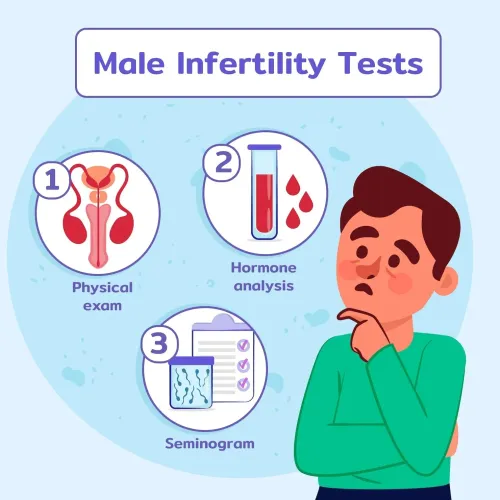
A fertility evaluation should identify the problem before treatment intensity increases. Review your age, how long you have been trying, menstrual and ovulation patterns, previous pregnancies, tubal patency and uterine structure.
A semen analysis is essential because male-factor infertility can be the only cause or part of the problem; repeat an abnormal result because semen measurements vary.
An AMH test and antral follicle count ultrasound estimate ovarian reserve and help predict the number of eggs obtained during stimulation. They do not measure egg quality or guarantee natural fertility. A low AMH does not prove pregnancy is impossible, while a normal result does not remove the effect of age-related egg-quality decline.
The next step depends on the findings:
| Option | What it involves | When it may be considered |
|---|---|---|
| Timed intercourse | Intercourse planned around ovulation | Ovulation is occurring, tubes are open and semen findings are reassuring |
| Ovulation induction | Medicines to trigger or support ovulation | Irregular or absent ovulation, with appropriate monitoring |
| Surgery | Treatment for selected polyps, fibroids, endometriosis or tubal disease | A correctable anatomical problem is found |
| Intrauterine insemination | Prepared sperm placed inside the uterus around ovulation | Suitable tubes and mild male-factor or unexplained infertility |
| IVF or ICSI | Fertilisation outside the body, with ICSI injecting one sperm into an egg | Blocked tubes, severe male-factor infertility, reduced ovarian reserve, or failed simpler treatment |
Tubal blockage and severe sperm abnormalities can make IVF the more practical first treatment. Ask which finding supports the recommendation and what less intensive option remains reasonable.
What happens during an IVF cycle
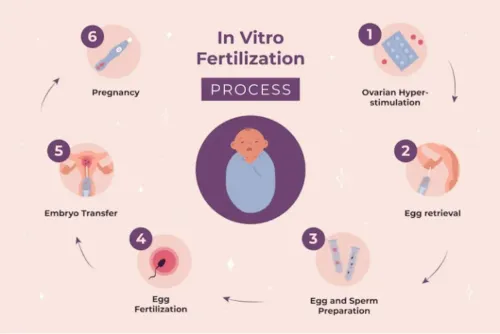
A typical IVF process takes about two to six weeks from starting medication to the pregnancy test. Preparation, including blood tests, ultrasound, semen analysis and consent, can add time. The active cycle requires daily medication, several monitoring visits and follow-up after transfer.
1. Ovarian stimulation usually lasts 8 to 12 days. You inject follicle-stimulating hormones, while an additional medicine may prevent premature ovulation. Ultrasound scans and oestradiol blood tests guide dose changes and show when follicles are ready.
2. A trigger injection completes egg maturation. Egg retrieval follows about 34 to 36 hours later, using a needle through the vagina under sedation or anaesthesia. The procedure takes roughly 15 to 30 minutes, followed by recovery at the clinic.
3. The laboratory fertilises suitable eggs and observes the embryos. Embryo transfer happens on day 3 or day 5 in a fresh cycle; if embryos are frozen, transfer occurs in a later prepared cycle instead.
4. After transfer, use prescribed progesterone support. Take a pregnancy blood test about 9 to 14 days later, then attend an early ultrasound if it is positive. Your clinic should explain when to stop medication and how follow-up changes after a negative result.
Monitoring is not optional: it reduces the risk of an excessive ovarian response and identifies whether follicles are developing. Ask for the injection schedule, appointment count, sedation plan, embryo-freezing plan and exact date for your pregnancy test before treatment begins.
Compare outcomes, risks and optional IVF procedures
A headline IVF success rate means little without its denominator. Ask whether it is measured per cycle started, egg retrieval, embryo transfer or patient, and whether it reports pregnancy or live birth. Demand age-specific results, including separate figures for patients over 35 and over 40, and ask whether donor eggs are included.
| Measure | What it tells you | Scrutiny point |
|---|---|---|
| Live birth rate per transfer | Births after one embryo transfer | Compare only with the same denominator |
| Live birth rate per retrieval | Outcome from one egg collection, including later frozen transfers | Ask for the cumulative result |
| Cumulative live birth rate | Chance across fresh and frozen transfers from one retrieval | Check the follow-up period and age group |
| Pregnancy rate | A positive test or ultrasound pregnancy | It is not a live birth rate |
Safety deserves equal weight. Ask how the clinic reduces OHSS risk through stimulation dosing, monitoring and trigger selection, and what emergency plan applies if you develop severe pain, vomiting, breathlessness or rapid abdominal swelling. Favor single embryo transfer when your prognosis is good; transferring two increases twin, preterm-birth and neonatal intensive-care risks.
- What randomized evidence shows improved cumulative live birth, not only a laboratory result?
- Which patient subgroup benefits, and what are the harms and extra costs?
- For PGT-A, what happens with mosaic or inconclusive results, and could biopsy leave no transferable embryo?
- Why are immune tests, steroids, intralipids, endometrial scratching or laboratory supplements recommended in your case?
Check the complete care pathway before booking
Ask for a written care pathway before you book: who manages stimulation and embryo transfer, who provides antenatal care after a positive test, where delivery occurs, and who takes charge if complications arise.
Verify the facility’s ART clinic registration India details under the Assisted Reproductive Technology (Regulation) Act, 2021, including its registration number and the services covered.
- Confirm that an embryologist handles gametes and embryos in an authorised laboratory.
- Ask whether an obstetrician provides scheduled antenatal visits, scans, high-risk pregnancy reviews, labour management and caesarean sections.
- Identify the delivery hospital by name, and ask whether the referral is routine, pre-booked or arranged only after a complication.
- Check emergency cover: 24-hour phone triage, immediate obstetric assessment, operating theatre, blood-bank access, ambulance transfer and a neonatal intensive care unit.
- Ask who provides postpartum reviews and newborn care, including the paediatrician, and whether an anaesthetist is available for emergency surgery or labour analgesia.
For Conceive IVF-IVF Centre, IVF Clinic in Hinjewadi, Wakad, Pune, use these questions to distinguish an IVF service from a complete maternity pathway rather than assuming one clinic supplies both. Get the answers, hospital name, emergency number and referral arrangements in writing.
If the facility cannot identify the obstetrician, paediatrician, anaesthetist or receiving hospital, arrange pregnancy and delivery care separately before starting treatment.
Related services
IVF Treatment Centre IVF Treatment Centre in Pimpri,Bhosari,PCMC,Pune Conceive IVF,Fertility And Test Tube Baby Center is the Best IVF Treatment Centre in Pimpri,Bhosari,Alandi,Charholi,PCMC and Pune. View service → |
IVF Centre,IVF Clinic in Pimpri,Bhosari,PCMC,Pune IVF Centre, IVF Clinic in Pimpri, Bhosari, PCMC, Pune ₹1000 Conceive IVF Fertility Centre is the Best IVF Centre, IVF Clinic, Infertility Centre, and Fertility Centre in Pimpri-Chinchwad, Bhosari, Alandi,... View service → |
Frequently asked questions
What is the difference between a maternity centre and an IVF clinic?
A maternity centre provides antenatal care, labour, delivery, postnatal recovery and newborn support. An IVF clinic evaluates infertility and manages eggs, sperm and embryos outside the body.
Should you investigate the cause of infertility before choosing IVF?
Yes. Fertility assessment helps identify factors involving ovulation, ovarian reserve, fallopian tubes, sperm or other reproductive conditions before selecting treatment.
What happens during an IVF cycle?
An IVF cycle involves fertility assessment, ovarian stimulation, monitoring, egg retrieval, fertilisation in the laboratory, embryo development and embryo transfer or freezing.
What should you compare before booking IVF treatment?
Compare expected outcomes, treatment risks, optional procedures, monitoring, laboratory services, counselling and the complete pathway from assessment through follow-up.