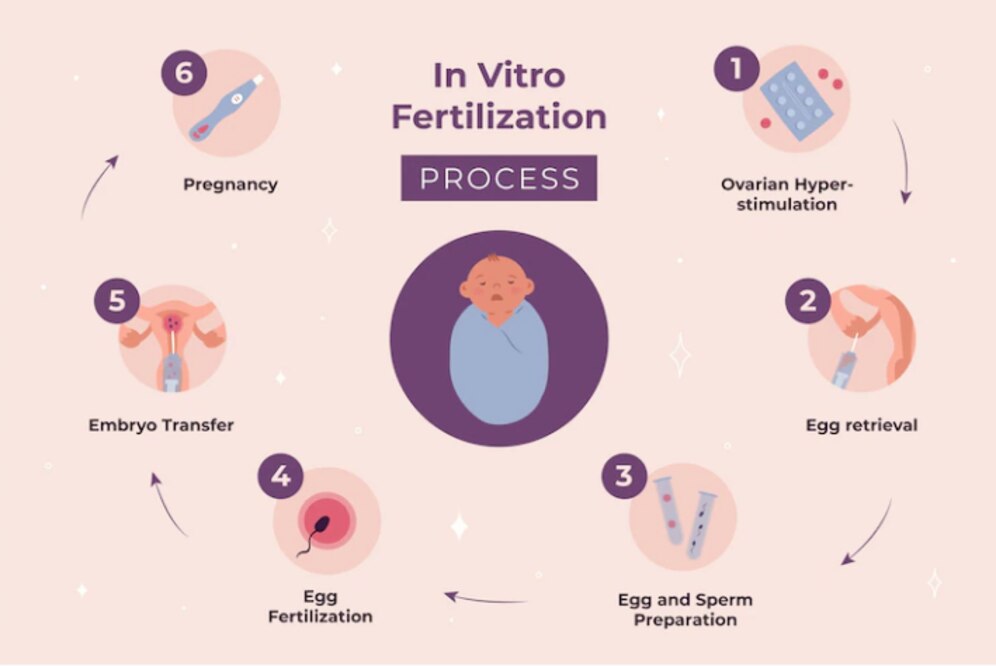
IVF works best when underlying gynecological, hormonal, metabolic and male-factor issues are identified before treatment begins and monitored throughout the cycle. By the end, you will know what your gynecologist checks, how that doctor coordinates with the IVF laboratory and what questions to ask before choosing a treatment plan.
Key takeaways
- Bring menstrual, pregnancy, surgery and medication records to your IVF consultation.
- Both partners need fertility evaluation before choosing IVF.
- Ask how ovarian stimulation, egg retrieval and embryo transfer will be managed.
- Discuss recovery, medicines and follow-up after retrieval and embryo transfer.
What your gynecologist checks before IVF
A gynecologist in Pimpri first decides whether IVF is appropriate and whether treatment must come before ovarian stimulation or embryo transfer. They review your menstrual history, ovulation history, pregnancies, miscarriages, contraception, pelvic pain, infections, surgery, medicines, thyroid disease, diabetes, hypertension and relevant family genetic conditions.
- A pelvic examination, when indicated, checks the vagina, cervix and signs of infection; your cervical screening record is also reviewed.
- Transvaginal ultrasound assesses the uterus, ovaries, antral follicle count and conditions such as polycystic ovary syndrome, fibroids, polyps, endometriosis, hydrosalpinx or adhesions.
- Blood investigations can include thyroid-stimulating hormone, prolactin, AMH and other cycle-related hormones. AMH and antral follicle count help predict ovarian response, not egg quality or live-birth success.
- Both partners need infection screening, while semen analysis and genetic testing are added according to medical history and family risk.
| Finding | Possible next step | Why it matters before IVF |
|---|---|---|
| Submucosal fibroid or polyp | Hysteroscopy or removal discussion | It can interfere with implantation |
| Hydrosalpinx | Tubal treatment discussion | Fluid may reduce implantation chances |
| Thyroid disease, diabetes or hypertension | Stabilise treatment first | Poor control raises pregnancy risks |
Treating every fibroid or endometriosis lesion is not automatically helpful; location, symptoms, age and ovarian reserve guide the decision. Ask for evidence, risks and costs before accepting add-ons such as immune testing, intralipids, endometrial scratching or hormonal supplements.
Why both partners need evaluation before choosing IVF
The gynecologist selects timed intercourse, ovulation induction, intrauterine insemination or IVF only after a fertility assessment of both partners. The male evaluation includes reproductive history and semen analysis; an abnormal result often requires repeat testing and an andrologist’s review.
Female assessment covers ovulation, pelvic ultrasound, tubal factors, thyroid and prolactin tests, AMH and antral follicle count. AMH and follicle count help estimate medication response, not egg quality or the chance of a live birth; age remains important.
| Option | What the evaluation shows | When it applies |
|---|---|---|
| Timed intercourse | Ovulation occurs and sperm, tubes and uterus appear suitable | Regular ovulation with no major fertility factor |
| Ovulation induction | Irregular or absent ovulation can respond to medication | Anovulation, including some PCOS cases, with usable sperm and open tubes |
| Intrauterine insemination | Prepared sperm can be placed near ovulation; adequate sperm and at least one open tube are needed | Selected unexplained, cervical or mild male-factor infertility |
| IVF | Fertilisation occurs in the laboratory, bypassing tubal transport and addressing more significant factors | Blocked tubes, severe male-factor infertility, reduced reproductive potential or failed simpler treatment |
The gynecologist also checks for conditions that could alter timing or safety, such as a submucosal fibroid, polyp, hydrosalpinx, endometriosis or uncontrolled thyroid disease. Treating a finding is not automatic; its location, symptoms, ovarian reserve, age and previous treatment determine whether it should be addressed before IVF.
How the gynecologist manages ovarian stimulation and egg retrieval
Medication decisions begin with a baseline ultrasound and hormone results. The gynecologist checks for ovarian cysts, counts antral follicles and confirms that the uterus is ready for treatment. AMH and the antral-follicle count help estimate response and choose a starting dose; they do not measure egg quality or guarantee a live birth.
During ovarian stimulation, injectable gonadotropins are reviewed against transvaginal follicle monitoring and, when needed, estradiol results. The doctor may alter the dose or pause treatment when follicles grow too quickly, hormone levels rise sharply or the response is weaker than expected. Increasing medicine is not a reliable fix for low ovarian reserve.
The trigger injection is timed when several leading follicles reach the clinic’s maturity target, commonly around 17–20 mm. Retrieval is then scheduled about 36 hours later, before spontaneous ovulation can reduce the number of eggs collected.
To reduce ovarian hyperstimulation syndrome (OHSS), the plan changes for high AMH, polycystic ovary syndrome or a rapidly growing follicle cohort:
- Start with an individualized gonadotropin dose and use a GnRH-antagonist protocol when appropriate.
- Consider a GnRH-agonist trigger instead of an hCG trigger in suitable cycles.
- Freeze embryos for a later transfer if immediate transfer would increase risk.
- Arrange follow-up for abdominal swelling, vomiting, breathlessness or reduced urine output.
Severe symptoms, faintness, or sudden chest or leg pain require urgent assessment for OHSS, bleeding or thrombosis.
What happens after retrieval and embryo transfer
After egg retrieval, your gynecologist reviews recovery, hormone results and the uterine lining before confirming transfer. Endometrial thickness, uterine anatomy, progesterone timing, embryo development and OHSS risk help determine whether transfer is fresh or frozen.
| Option | Timing and monitoring | Why it may be chosen |
|---|---|---|
| Fresh embryo transfer | Transfer during the same stimulation cycle | Suitable when lining, progesterone timing and medical condition are favourable |
| Frozen embryo transfer | Embryo is stored and transferred in a later prepared cycle | Useful when the lining needs treatment, progesterone is mistimed or OHSS risk is high |
After embryo transfer, progesterone support helps maintain the uterine lining. Take it exactly as prescribed and ask before stopping, even if you notice spotting or cramping.
Your clinic sets the pregnancy test date, often 9 to 14 days after transfer. A positive pregnancy test confirms pregnancy hormone, not the pregnancy’s location. The gynecologist arranges repeat hormone testing when needed and an early transvaginal ultrasound to confirm an intrauterine pregnancy and assess development.
Seek urgent medical assessment for severe or rapidly increasing abdominal swelling, persistent vomiting, shortness of breath, reduced urine output, faintness, heavy bleeding, fever, or sudden chest or leg pain. Pelvic pain, vaginal bleeding, dizziness and shoulder-tip pain are ectopic pregnancy symptoms; do not wait for a routine appointment.
How to prepare for an IVF consultation in Pimpri
Bring previous treatment reports, scan images, semen-analysis results, operative notes, discharge summaries and your medication list to the IVF consultation. Include menstrual-cycle dates, allergy details, vaccination records, cervical-screening results and records of thyroid disease, diabetes or hypertension.
- List every prescription, supplement and fertility medicine, including dose and start date.
- Record prior stimulation cycles, egg numbers, embryos created, transfers, pregnancy tests and outcomes.
- Note smoking, alcohol use, folic-acid use and relevant family genetic conditions.
The gynecologist reviews your reproductive history, examines or investigates uterine and endocrine problems, checks medicines and health risks, and coordinates stimulation, trigger timing, transfer and early pregnancy care. The andrologist evaluates male factors and semen preparation; the embryologist handles sperm processing, fertilisation, embryo culture, freezing and laboratory genetic testing.
Ask who performs each task and who explains results.
Before consenting, compare local services using written, age- and diagnosis-specific live-birth data rather than one pregnancy percentage. Conceive IVF-IVF Centre, IVF Clinic in Hinjewadi, Wakad, Pune is one option to assess by asking the same questions you ask every clinic.
| Service check | Ask for | Warning sign |
|---|---|---|
| Medical care | Named doctor, monitoring schedule and emergency contact | No clear responsibility |
| Laboratory | Embryologist access and lab procedures | Vague answers about embryos |
| Outcomes | Live-birth rates, not only pregnancy rates | Clinic-wide headline figure |
| Costs | Itemised cycle, medicines, storage and add-ons | Pressure to buy immune testing, scratching or supplements without evidence and trial details |
Related services
IVF Treatment Centre IVF Treatment Centre in Pimpri,Bhosari,PCMC,Pune Conceive IVF,Fertility And Test Tube Baby Center is the Best IVF Treatment Centre in Pimpri,Bhosari,Alandi,Charholi,PCMC and Pune. View service → |
IVF Counselling Centre IVF Counselling Centre in Pimpri,Bhosari,PCMC,Pune ₹1000 Conceive IVF,Fertility And Test Tube Baby Center is the Best IVF Counselling Centre in Pimpri,Bhosari,Alandi,Charholi,PCMC and Pune. View service → |
Frequently asked questions
What does a gynecologist check before IVF?
They review your menstrual and ovulation history, pregnancies, miscarriages, contraception, pelvic pain, infections, surgery, medicines, thyroid disease, diabetes, hypertension and relevant family genetic conditions.
Why do both partners need evaluation before IVF?
Infertility can involve female, male or combined factors. Evaluating both partners helps the gynecologist identify the likely cause and choose treatment appropriately.
How does a gynecologist manage ovarian stimulation and egg retrieval?
The gynecologist monitors ovarian stimulation and coordinates egg retrieval, using treatment information and monitoring findings to guide the next IVF step.
What happens after egg retrieval and embryo transfer?
After retrieval, the care team explains embryo development and transfer planning. After transfer, your gynecologist provides follow-up instructions and discusses medicines and next steps.
How should you prepare for an IVF consultation in Pimpri?
Bring records covering your menstrual cycle, ovulation, pregnancies, miscarriages, surgeries, infections, medicines and medical conditions. Prepare questions about evaluation, stimulation, retrieval, transfer and follow-up.
Related service
IVF Specialist,IVF Doctor in Pimpri,Bhosari,PCMC,Pune IVF Specialist, IVF Doctor in Pimpri, Bhosari, PCMC, Pune ₹1000 Dr Madhuri Roy is a leading and trusted IVF Consultant, IVF Specialist, and IVF Doctor in Pimpri-Chinchwad, Bhosari, Alandi, Charholi, PCMC and Pune. View service → |