Choosing the right clinician depends on your age, menstrual pattern, medical history, and how long you have been trying to conceive. By the end, you will know when a gynecologist is a sensible first contact, when to book a fertility consultation directly, which tests should involve both partners, and how to compare providers in Nigdi.
Key takeaways
- Start with a gynecologist for preconception concerns or unexplained reproductive symptoms.
- Seek a fertility specialist after 12 months trying, or six months after age 35.
- Request ovulation assessment, pelvic ultrasound, and partner semen analysis.
- Compare counselling, laboratory standards, treatment options, and transparent follow-up policies.
Which clinician should you contact first?
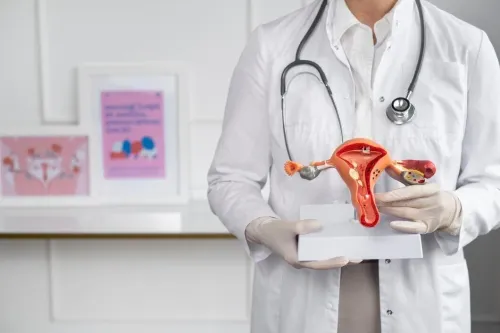
Start with a general gynecologist if infertility has not been established. A preconception review, irregular periods, suspected PCOS, pelvic pain, contraception questions, or a review of previous pregnancies and pelvic surgeries all fit this route. A gynecologist in Nigdi can assess common menstrual and reproductive problems, begin basic tests, and refer you.
Ask when to see a fertility doctor if age or test results make time important.
| Clinician | What they can do | When to contact them |
|---|---|---|
| General gynecologist | Review cycles, ovulation, pelvic symptoms, prior pregnancies and surgeries; begin basic testing | Before infertility is established or for common menstrual and reproductive concerns |
| Fertility specialist | Coordinate partner testing, investigate tubal, ovarian and sperm factors, and plan IUI or IVF | Abnormal initial results, failed treatment, age-related time pressure, or possible assisted reproduction |
| Reproductive endocrinologist | Provide specialised fertility and hormone care within reproductive medicine | Complex ovulation problems, reduced ovarian reserve, endometriosis, or a need for advanced treatment |
| Urgent medical clinician | Assess possible ectopic pregnancy, infection, ovarian torsion, or significant bleeding | Severe or one-sided pelvic pain, fainting, fever, very heavy bleeding, or pregnancy with pain or bleeding |
- Book an infertility evaluation after 12 months of regular unprotected intercourse if you are under 35, after 6 months at ages 35 to 39, and without delay at 40 or older.
- Seek help sooner for absent or irregular periods, suspected endometriosis, prior pelvic infection or surgery, recurrent miscarriage, or known sperm-related concerns.
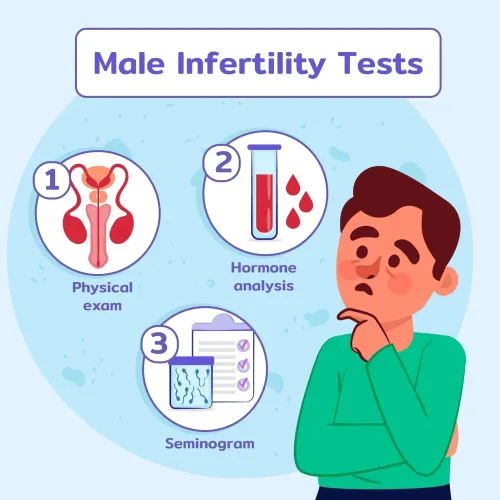
- Evaluate both partners from the start. A semen analysis checks sperm count, movement, and shape before you undergo invasive testing.
What should the first fertility evaluation include?
A first fertility evaluation should answer three questions: is ovulation occurring, are the uterus and fallopian tubes suitable for pregnancy, and could age or ovarian reserve affect treatment planning? No single test answers all three.
1. A gynecologist takes your menstrual and pregnancy history, performs a pelvic examination, arranges a pregnancy test, and reviews cervical screening when it is due. An ovulation assessment may include cycle-pattern review and targeted testing. Thyroid-stimulating hormone or prolactin testing is ordered when your history indicates it.
2. A pelvic ultrasound examines the uterus and ovaries for fibroids, cysts, and signs associated with polycystic ovary syndrome. A normal scan does not prove that the fallopian tubes are open; tubal patency requires a test such as hysterosalpingography or HyCoSy.
3. Start evaluation with both partners, not only the woman. A semen analysis checks sperm count, movement, and shape before you consider invasive procedures, while age and ovarian-reserve findings help shape treatment discussions rather than predict pregnancy alone.
Bring your cycle dates, previous scan and laboratory reports, operation notes, medication details, pregnancy records, and dates of prior fertility treatments. Ask who will review the results and when you will receive a written plan.
When does a fertility specialist add important testing?
A fertility specialist adds coordinated testing when basic evaluation does not explain infertility, a tubal or ovarian factor is suspected, or treatment must be timed carefully. The specialist connects test results with age, menstrual history, semen analysis, tubal status, and your treatment goals.
| Test | What it assesses | What it cannot prove |
|---|---|---|
| HSG test for blocked tubes | Hysterosalpingography uses contrast imaging to show whether the tubes are open and whether the uterine cavity looks abnormal | A normal result does not establish normal fertility |
| HyCoSy or saline sonography | Ultrasound-based assessment of the uterine cavity and tubal passage | It does not answer every cause of infertility |
| AMH test | A blood marker used in ovarian reserve testing and to help predict response to stimulation | It does not prove whether natural conception is possible |
| Antral follicle count | The number of visible small follicles on an ultrasound scan | It does not measure egg quality |
| Early-follicular-phase FSH | Another indicator used in ovarian reserve assessment | A low AMH or other reassuring result does not guarantee pregnancy |
Endometriosis assessment may require a focused history, pelvic examination, imaging, and referral for laparoscopic surgery when indicated. Ask which finding would change management, which test is optional, and whether you need surgery or another advanced service.
These results guide treatment planning rather than deliver a fertility verdict. A specialist should explain how each finding affects observation, medication, IUI, or IVF.
When is ovulation treatment, IUI, or IVF the appropriate next step?
Choose treatment according to the cause, your age, test results, and preferences—not a fixed IVF-first pathway.
1. If PCOS is causing anovulatory infertility and no other factor is present, letrozole for PCOS infertility is the preferred first-line ovulation-induction treatment. PCOS alone does not make IVF the appropriate first step.
2. With unexplained infertility, ask whether oral ovarian stimulation with IUI treatment is suitable for several cycles. The number should reflect your age, infertility duration, ovarian reserve, semen findings, and willingness to continue treatment.
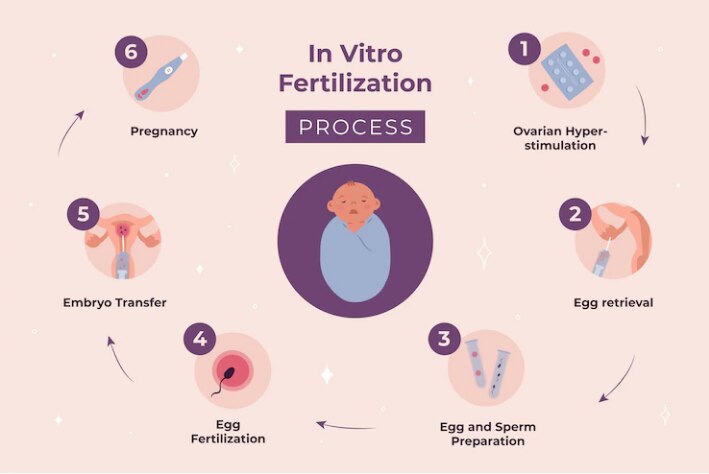
3. IVF indications become stronger when fallopian tubes are blocked or severely damaged, sperm-related infertility is severe, endometriosis is significant, ovarian reserve is markedly reduced, or less-invasive treatment has failed. Female age matters because egg number and chromosomal normality decline over time.
4. Before consenting, ask for live-birth rates rather than pregnancy rates, the likely number of cycles, medication-monitoring requirements, cancellation rules, multiple-pregnancy risk, ovarian hyperstimulation syndrome risk, embryo-transfer strategy, and the plan for unexpected findings. Discuss IVF risks and success rates in the context of your diagnosis and age, not an overall clinic percentage.
How can you compare fertility providers in Nigdi?
Compare the clinician and the care pathway, not only an advertised IVF price or pregnancy percentage. A fertility clinic in Nigdi should disclose the named doctor’s fertility doctor qualifications, ultrasound and laboratory access, and whether both partners are assessed from the start.
Use the same checklist for Conceive IVF-IVF Centre, IVF Clinic in Hinjewadi, Wakad, Pune as for every provider.
| Option | What to compare | What to ask |
|---|---|---|
| Clinician | Medical and reproductive-medicine qualifications | Who diagnoses you, reviews results, and changes medicines? |
| Testing | Ultrasound, laboratory testing, and semen analysis | Are these available through the service, and is the male partner assessed at the first visit? |
| Outcomes | Clinical pregnancy, ongoing pregnancy, or live birth | Are figures grouped by age and diagnosis, and do they cover fresh transfers, frozen transfers, or cumulative treatment? |
| Care pathway | Observation, medication, IUI, and IVF | What is the expected timeline, total monitoring visits, cancellation policy, and embryo-transfer strategy? |
| Safety and access | Urgent care and referral network | Who handles urgent symptoms, and are there referrals for tubal or endometriosis surgery, donor treatment, or advanced reproductive care? |
Request the alternatives in writing. These IVF consultation questions expose whether a low quoted price excludes monitoring, medicines, scans, laboratory work, or later procedures.
The best first appointment gives both partners a diagnosis pathway, realistic alternatives, and a defined next decision. Ask what happens after an unexpected finding rather than accepting an IVF-first plan.
Related services
Female Infertility Treatment Centre in Nigdi,Akurdi,Chinchwad,PCMC,Pune Female Infertility Treatment Centre in Nigdi,Akurdi,Chinchwad,PCMC,Pune Conceive IVF,Fertility And Test Tube Baby Center is the Best Female Infertility Treatment Centre in Nigdi,Akurdi,Chinchwad,PCMC and Pune. |
IVF Counselling Centre IVF Counselling Centre in Nigdi,Akurdi,Chinchwad,PCMC,Pune Conceive IVF,Fertility And Test Tube Baby Center is the Best IVF Counselling Centre in Nigdi,Akurdi,Chinchwad,PCMC and Pune. |
Frequently asked questions
Should you see a gynecologist or fertility specialist first in Nigdi?
Start with a general gynecologist when infertility has not been established. They can review your menstrual history, pregnancies, surgeries, symptoms, and preconception needs, then refer you when specialist care is appropriate.
What does a first fertility evaluation include?
It usually includes a medical and reproductive history, menstrual-cycle review, physical examination when indicated, ovulation assessment, pelvic ultrasound, and partner semen analysis. Additional tests depend on your symptoms and history.
When does a fertility specialist add important testing?
A fertility specialist adds targeted testing for persistent infertility, irregular or absent ovulation, suspected diminished ovarian reserve, endometriosis, tubal disease, recurrent pregnancy loss, or previous unsuccessful treatment.
When are ovulation treatment, IUI, or IVF appropriate?
Treatment depends on the cause, age, ovarian reserve, sperm results, tubal status, and treatment history. Ovulation medication fits some ovulation disorders; IUI requires usable sperm and at least one open tube; IVF bypasses the tubes and suits conditions such as blocked tubes or selected cases of severe infertility.
Related services
IVF Treatment Centre in Nigdi,Akurdi,Chinchwad,PCMC,Pune IVF Treatment Centre in Nigdi,Akurdi,Chinchwad,PCMC,Pune Conceive IVF,Fertility And Test Tube Baby Center is the Best IVF Treatment Centre in Nigdi,Akurdi,Chinchwad,PCMC and Pune. |
Female Infertility Treatment Centre Female Infertility Treatment Centre in Pimpri,Bhosari,PCMC,Pune Conceive IVF,Fertility And Test Tube Baby Center is the Best Female Infertility Treatment Centre in Pimpri,Bhosari,Alandi,Charholi,PCMC and Pune. |
Female Infertility Treatment Centre Female Infertility Treatment Centre in Hinjewadi,Wakad,PCMC,Pune Conceive IVF,Fertility And Test Tube Baby Center is the Best Female Infertility Treatment Centre in... View service → |
Female Infertility Treatment Centre in Bhosari Female Infertility Treatment Centre in Bhosari,PCMC,Pune Conceive IVF,Fertility And Test Tube Baby Center is the Best Female Infertility Treatment Centre in Bhosari, Dighi, Charholi, Alandi, PCMC and Pune. View service → |