Choosing IVF depends on more than an egg count or a clinic’s headline success rate. You will be able to identify the medical findings that change the plan, prepare for a useful consultation, and compare recommendations before consenting to treatment.
Key takeaways
- IVF makes sense when diagnosis or delay lowers the chance of simpler treatment.
- Bring semen analysis, hormone results, ultrasound reports, and prior treatment records.
- Ask who performs each IVF step and how complications will be handled.
- Compare recommendations by diagnosis, evidence, timelines, risks, and total treatment steps.
When IVF Is the Right Next Step
IVF is the right next step when the diagnosis, age, ovarian reserve, or risk of delay makes simpler treatment unlikely to work or unsafe to postpone. A pregnancy doctor in Nigdi uses a fertility assessment to decide between timed intercourse versus IVF, not to send every patient straight to a procedure.
- Start evaluation after 12 months of regular unprotected intercourse if you are under 35, or after 6 months if you are 35 or older. Seek help sooner for irregular or absent periods, suspected endometriosis, blocked tubes, prior pelvic infection, recurrent miscarriage, or known sperm problems.
- Match treatment to the finding. Regular ovulation with no major abnormality may suit timed intercourse; irregular ovulation may respond to ovulation-induction medicines. Intrauterine insemination can fit selected sperm or ovulation problems, while surgery may address endometriosis, fibroids, or tubal disease.
- Move toward IVF sooner for blocked tubes, severe male-factor infertility, significant endometriosis, prolonged unexplained infertility, failed simpler treatment, or a sharply reduced ovarian reserve. Age and ovarian reserve affect the cost of waiting because egg quantity and quality decline over time.
- Before stimulation or embryo transfer, review diabetes, high blood pressure, thyroid disease, medications, smoking, alcohol, vaccination status, weight, and folic-acid intake. Treating these issues can make delaying IVF safer and reduce pregnancy complications.
The doctor also explains ovarian hyperstimulation syndrome risk and coordinates with the IVF team. Ask what would change the recommendation if your diagnosis, sperm results, or medical risks change.
The Records and Tests That Shape the Recommendation
Bring records that let the doctor reconstruct what happened, not just a summary of it. Missing dates or reports can lead to repeated tests and delay a treatment decision.
- Menstrual-cycle dates, cycle length, bleeding changes, and ovulation-tracking results
- Previous pregnancy, delivery, abortion, and miscarriage records
- Every semen analysis report, including the collection date and laboratory reference ranges
- Ultrasound reports and images, including follicle counts
- Hormone results, with the test date and cycle day
- Current medicines, vitamins, herbal products, and supplements
- Reports from pelvic surgeries, infections, or procedures
- Stimulation, retrieval, transfer, embryo, and pregnancy records from earlier IVF cycles
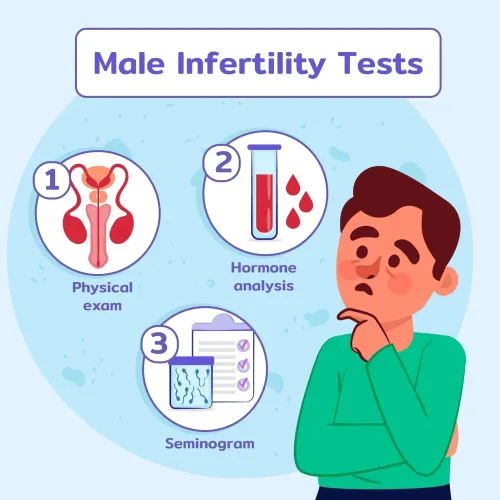
Both partners need assessment at the start. A semen analysis is a first-line test, not a test to postpone until the woman has completed extensive investigations; repeat testing may be needed because sperm concentration, movement, and shape vary between samples.
An AMH test, antral follicle count, and day-2-to-4 FSH estimate how many eggs stimulation might yield. They do not directly measure egg quality, and low AMH alone does not rule out IVF. The doctor also assesses ovulation, performs a tubal evaluation when relevant, and reviews uterine imaging.
Thyroid testing and diabetes screening belong in the plan when symptoms, history, or pregnancy risk justify them.
Low reserve can alter timing or prompt fertility-preservation or donor-egg discussions. Poor sperm quality can shift treatment toward male-factor care or ICSI. Fibroids, endometriosis, blocked tubes, or recurrent miscarriage can require surgery or additional evaluation before embryo transfer.
How the Pregnancy Doctor Works with the IVF Team
Before stimulation or embryo transfer, the pregnancy doctor decides whether proceeding is medically safe. The review covers diabetes, hypertension, thyroid disease, medications, vaccination, smoking, alcohol, weight, folic-acid use, prior pregnancies, and pregnancy-related risks. Treating or stabilising a problem can mean delaying IVF; ignoring it can complicate pregnancy.
Ask the team to define each role clearly:
- The IVF specialist versus gynaecologist: the IVF specialist, also called a reproductive endocrinologist, chooses ovarian-stimulation medicines, monitoring, egg retrieval, and embryo-transfer strategy. The gynaecologist manages broader pelvic and reproductive concerns, such as fibroids, endometriosis, abnormal bleeding, or cervical problems.
- The embryologist: fertilises eggs, cultures and grades embryos, performs biopsy when requested, and freezes embryos.
- The genetic counsellor: explains inherited-condition testing and PGT-A, including that it screens for chromosome-number differences rather than guaranteeing a healthy baby. Biopsy, mosaic or inconclusive results, and limited benefit in some situations also need discussion.
- The pregnancy doctor: weighs medical history, fertility findings, and the risks of proceeding now versus treating a condition first.
These professionals should share reports and agree on one plan, not issue disconnected recommendations. After a positive test, the pregnancy doctor remains involved: early scans help assess ectopic pregnancy, while follow-up monitors miscarriage, hypertension, gestational diabetes, and multiple-pregnancy risks. IVF does not replace ordinary obstetric care.
Questions to Ask Before You Consent to IVF
Before signing, ask for a written plan and use these IVF consent questions to identify what happens, what could change, and who to contact.
1. How many cycles do you expect before reassessing? Ask for each medication name, dose, start date, schedule, injection-teaching session, monitoring visits, blood tests, and ultrasound appointments.
2. How will egg retrieval be performed? Confirm the route, sedation or anaesthesia, fasting instructions, recovery time, and risks. Ask what would cancel the cycle, such as poor follicle response, excessive response, illness, or premature ovulation.
3. When would embryo transfer occur: fresh, or after freezing? Ask how embryos are graded, the embryo-freezing and storage policy, and what happens if no embryo is suitable for transfer.
4. What does your success figure measure: each cycle started, egg retrieval, embryo transfer, or cumulative live birth after fresh and frozen transfers? Request figures separated by age, diagnosis, donor eggs, and own eggs.
5. Is single-embryo transfer appropriate? Transferring two embryos raises twin risks, including preterm birth, pregnancy hypertension, and complications for both babies. Ask when PGT-A is indicated, its biopsy risks and inconclusive-result rate, and why it is not automatically needed.
6. What is the ovarian hyperstimulation syndrome prevention plan? Get warning signs—rapid abdominal swelling, severe pain, vomiting, dehydration, breathlessness, or reduced urination—plus emergency contacts and same-day instructions.
7. Ask about ectopic-pregnancy follow-up after a positive test, including the timing of blood tests and ultrasound. For immune therapies, endometrial scratching, assisted hatching, or embryo-selection tests, demand evidence, risks, additional cost, and whether the treatment belongs in a governed clinical study.
How to Compare IVF Recommendations in Nigdi
Compare IVF clinics by the plan they build for your case, not by one success percentage. Ask each team to name the diagnosis, explain the treatment rationale, and state whether timed intercourse, ovulation induction, intrauterine insemination, surgery, sperm treatment, donor eggs, or fertility preservation remains a reasonable alternative.
Request clear answers about:
- IVF laboratory standards, embryo culture, freezing, and storage procedures
- The embryo-transfer policy, including when single-embryo transfer is advised
- Counselling access and the plan for OHSS, ectopic pregnancy, miscarriage, or other complications
- Itemised IVF fees covering consultation, procedures, medicines, freezing, and storage
| Comparison point | A useful answer includes | Warning sign |
|---|---|---|
| Success rate | Age-specific live-birth or cumulative results, separated by own and donor eggs | One unexplained percentage |
| Treatment fit | Age, AMH, antral follicle count, sperm quality, tubes, endometriosis, fibroids, miscarriages, and prior IVF outcomes | A standard protocol for every patient |
| Embryo transfer | Single-embryo policy and the reason for transferring more than one | Twins presented as the goal |
| Add-ons | Evidence, risks, extra cost, and study governance for immune therapy, scratching, assisted hatching, or selection tests | Add-ons treated as essential |
A pregnancy-focused review can change timing when diabetes, thyroid disease, hypertension, medication safety, or pregnancy-risk planning needs attention. Preconception counselling in Nigdi can complement an IVF consultation; Conceive IVF-IVF Centre, IVF Clinic in Hinjewadi, Wakad, Pune is one local option for coordinating fertility findings and pregnancy risks.
Get a second qualified opinion when the rationale or costs remain unclear.
Related service
IVF Consultant,IVF Specialist,IVF Doctor in Nigdi,Akurdi,Chinchwad,PCMC,Pune IVF Consultant,IVF Specialist,IVF Doctor in Nigdi,Akurdi,Chinchwad,PCMC,Pune Dr Madhuri Roy is a A Reliable and one of the Best IVF Consultant, IVF Expert, IVF Specialist, IVF Doctor in Nigdi, Akurdi, Sambhaji Nagar, Chikhali,... |
Frequently asked questions
When is IVF the right next step?
IVF may be appropriate when the diagnosis, age, ovarian reserve, or risk of delay makes simpler treatment unlikely to work or unsafe to postpone.
Which records and tests shape an IVF recommendation?
The doctor reviews fertility history, semen analysis, hormone tests, ovarian reserve results, ultrasound findings, tubal assessment, and previous treatment records.
How does a pregnancy doctor work with the IVF team?
The pregnancy doctor helps interpret the fertility assessment, coordinate care with the IVF team, and address medical risks before treatment begins.
What should you ask before consenting to IVF?
Ask why IVF is recommended, what alternatives remain, which tests support the decision, what each step involves, and how risks and complications will be managed.
How can you compare IVF recommendations in Nigdi?
Compare the diagnosis behind each recommendation, proposed treatment steps, expected timeline, alternatives, risks, monitoring plan, and clarity about follow-up care.