Choose a routine gynecologist consultation for general reproductive, menstrual, vaginal, menopause or pregnancy-related concerns, and seek fertility-focused care when conception has taken longer than expected or a known risk factor exists. By the end, you will know which specialist fits your situation, what the first appointment may include, and how to judge whether IVF is actually the appropriate next step.
Key takeaways
- Choose a gynecologist for bleeding, pelvic pain, discharge, contraception, or menopause symptoms.
- Start infertility evaluation after 12 months under age 35, or six months from age 35.
- Bring medical records, cycle dates, medication details, and previous fertility reports.
- Ask about embryo testing, laboratory safety, treatment alternatives, and add-on evidence.
Which consultation matches your symptoms or concern?
A gynecologist consultation is the usual first appointment for abnormal bleeding, pelvic pain, painful or irregular periods, unusual vaginal discharge, suspected PCOS, contraception, menopause symptoms, cervical screening or pregnancy-related care. Choose fertility-focused care when the main concern is difficulty conceiving, repeated miscarriage, a known tubal problem, low sperm count or unsuccessful fertility treatment.
| Consultation | Best fit | Main focus |
|---|---|---|
| General gynecologist | Pain, bleeding, discharge, contraception or menopause | Diagnosis, treatment, screening and routine reproductive care |
| Obstetrician-gynaecologist | Pregnancy planning, antenatal care or pregnancy complications | Pregnancy and gynecological care |
| IVF specialist | Difficulty conceiving or treatment planning | Ovulation treatment, IUI, IVF and embryo decisions |
| Reproductive endocrinologist Pimpri | Hormone, ovulation or complex infertility concerns | Ovarian reserve, endocrine disorders and advanced fertility assessment |
Seek urgent medical attention for severe pelvic pain with fainting, heavy bleeding, fever, or a positive pregnancy test with one-sided pain. Do not wait for a routine appointment.
These roles overlap. Before booking an IVF doctor in Pimpri, ask what the doctor personally evaluates and whether hormone testing, ultrasound, semen analysis, IUI and IVF are available at the same clinic.
A gynecologist consultation is not a lesser form of fertility care; it is the correct starting point when pain, bleeding, infection, pregnancy care or menopause symptoms lead the concern.
A normal cycle does not rule out infertility, so book fertility assessment after 12 months of trying if you are under 35, or after 6 months if you are 35 or older.
When should you start an infertility evaluation?
Start an infertility evaluation after 12 months trying to conceive through regular unprotected intercourse when the woman is under 35. At age 35 or older, arrange a 6 months infertility evaluation instead of waiting a full year.
1. Book earlier if periods are very irregular or absent, ovulation seems unreliable, or endometriosis is known or suspected. Do not delay after pelvic surgery, possible fallopian-tube damage or blockage, recurrent miscarriages, or a previous ectopic pregnancy.
2. Discuss prompt assessment after cancer treatment, when diminished ovarian reserve is suspected, or when erectile or ejaculation problems affect intercourse. If you search for male-factor infertility Pimpri care, remember that the male partner needs assessment too.
3. Test both partners from the outset. Semen analysis is a standard first-line test because sperm count, movement and shape can affect conception alone or alongside a female factor. Regular periods and a normal-looking uterus do not rule out tubal disease, endometriosis or sperm abnormalities.
4. Ask when to see an IVF doctor if you have reached the relevant time threshold or have any earlier-risk factor.
Evaluation does not commit you to IVF; the next step could be timed intercourse, ovulation-induction medicine, surgery, IUI, donor sperm or eggs, or IVF, based on age, infertility duration, tubal status, sperm findings, ovarian reserve and previous treatment.
What happens at the first consultation, and what should you bring?
A first IVF consultation starts with your history, not an automatic IVF recommendation. Expect questions about menstrual-cycle dates, cycle length, bleeding, pain, ovulation signs, contraception, sexual frequency, previous pregnancies, miscarriages, ectopic pregnancy, infections, operations, medical conditions and family history.
The doctor may discuss a physical examination, a pelvic examination when indicated, ultrasound planning and examination of both partners.
For a fertility assessment in Pimpri, bring:
- A dated menstrual record
- Names and doses of medicines, vitamins and supplements
- Previous pelvic ultrasound reports
- Hormone, thyroid and prolactin results
- Semen-analysis reports
- Operative notes and discharge summaries
- Records of prior fertility treatment
| Investigation | Main question it answers | Important limit |
|---|---|---|
| Pelvic ultrasound | What do the uterus, ovaries and visible pelvic structures look like? | It cannot rule out every fertility problem |
| Antral follicle count | How many small follicles are visible in the ovaries? | It does not measure egg quality |
| AMH ovarian reserve test | How might the ovaries respond to stimulation? | It does not guarantee natural conception or live birth |
| Ovulation assessment | Is an egg being released? | It does not assess tubal patency |
| Thyroid and prolactin tests | Is a hormonal problem affecting fertility? | Results need clinical interpretation |
| Tubal-patency testing | Can sperm and egg meet? | It does not assess sperm function |
The history determines which tests are appropriate. AMH and antral follicle count estimate ovarian reserve and likely stimulation response; they do not prove that IVF is necessary or predict egg quality.
How do you know whether IVF is the right next step?
IVF is the right next step only when your diagnosis, age, treatment history and alternatives support it—not because a clinic offers it. Ask the doctor to explain the diagnosis, whether IVF is necessary, and the expected number of eggs and embryos.
| Option | What it means | When it applies |
|---|---|---|
| Timed intercourse or ovulation treatment | Track ovulation or use medicine to release an egg | Ovulation problems with usable tubes and sperm |
| Surgery | Treat a structural problem such as a fibroid, polyp or blocked tube | The finding is likely to prevent conception or implantation |
| IUI | Place prepared sperm inside the uterus | Selected ovulation, unexplained or mild male-factor infertility |
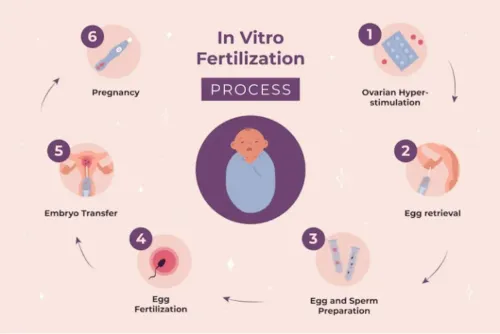
| IVF | Fertilise eggs in the laboratory and transfer an embryo | Tubal damage, severe sperm-factor infertility or failed simpler treatment |
Ask what happens if there are few eggs, no fertilisation, no transferable embryos or no pregnancy after transfer. These attrition points matter more than one headline percentage.
Female age affects embryo chromosome status and outcomes. Compare IVF success rate by age, diagnosis and treatment type, using the correct denominator: cycles started, egg retrievals, embryo transfers or cumulative live birth rate. AMH and antral follicle count predict ovarian response, not egg quality.
Before choosing Conceive IVF-IVF Centre, IVF Clinic in Hinjewadi, Wakad, Pune, ask for a plan tied to your reports, ART clinic registration India status, embryology-laboratory lead, consent and record procedures, and an estimate itemising medicines, scans, procedures, laboratory work and storage fees.
What safety, embryo and add-on questions should you ask?
Before consenting to IVF, ask questions that expose safety risks, embryo choices and extra procedures before you sign consent.
1. What is my risk of ovarian hyperstimulation syndrome (OHSS), and which warning signs require urgent help? Rapidly increasing abdominal swelling, severe pain, vomiting, breathlessness or reduced urine can signal a serious complication rather than ordinary bloating.
2. How will you reduce that risk? Ask whether an antagonist stimulation protocol, an agonist trigger instead of hCG, cabergoline in selected cases, or freezing embryos for later transfer is suitable when a fresh transfer would increase risk.
3. Why do you recommend transferring one embryo or more? Multiple-embryo transfer raises the chance of twins or higher-order pregnancy, preterm birth and maternal complications. Single-embryo transfer is appropriate in many situations, with suitable remaining embryos frozen for later use.
4. What would PGT-A testing change for someone my age and with my diagnosis? PGT-A may help in selected cases, but it does not guarantee a healthy baby or universally improve cumulative live birth. Ask how mosaic and inconclusive results are handled, how many embryos could become unavailable, and what the test costs.
5. Which IVF add-ons have evidence for my situation? Treat immune therapies, assisted hatching and endometrial scratching as optional claims, not automatic IVF steps.
6. Can I receive a written plan covering medication dates, monitoring, trigger timing, egg retrieval, fertilization method, embryo transfer, freezing, storage, cancellation rules and emergency contacts?
Frequently asked questions
Should I see a gynecologist or an IVF doctor first?
See a gynecologist for abnormal bleeding, pelvic pain, discharge, contraception, menopause symptoms, or routine pregnancy-related care. Choose fertility-focused care for difficulty conceiving, recurrent miscarriage, tubal problems, low sperm count, or failed fertility treatment.
When should I start an infertility evaluation?
Start after 12 months of regular unprotected intercourse when the woman is under 35, or after six months when she is 35 or older. Seek evaluation sooner for irregular periods, suspected endometriosis or PCOS, known tubal disease, recurrent miscarriage, or male-factor concerns.
What should I bring to my first fertility consultation?
Bring menstrual-cycle dates, medication and supplement lists, prior pregnancy records, semen-analysis reports, ultrasound scans, blood-test results, surgery notes, and details of previous fertility treatment.
How do I know whether IVF is the right next step?
The decision depends on the cause and duration of infertility, age, ovarian reserve, tubal status, semen results, previous treatment, and your preferences. Ask which less invasive options remain and why IVF is recommended now.
What questions should I ask about IVF safety, embryos, and add-ons?
Ask about infection-control procedures, laboratory quality checks, embryo storage and identification, embryo-transfer limits, genetic testing indications, treatment risks, and the evidence, cost, and alternatives for every add-on.