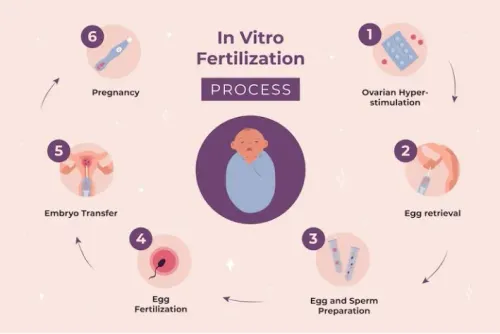
Before you compare IVF clinics, a gynecologist should establish whether IVF is the right next step and identify the medical factors that will shape treatment. You will then know which questions to ask about the team, laboratory, success rates, safety procedures, costs and follow-up care, instead of choosing from package prices or promotional claims.
Key takeaways
- Confirm whether timed intercourse, medication or IUI should come before IVF.
- Ask who performs procedures and how the embryology laboratory is managed.
- Compare success rates only when age, diagnosis and outcome definitions match.
- Request a written estimate listing medicines, procedures, storage and extra charges.
Is IVF the right first treatment for both partners?
IVF is not automatically the right first treatment for both partners. A gynecologist can determine whether your findings support an IVF indication or whether timed intercourse, ovulation-induction medicine or intrauterine insemination should come first.
The fertility work-up should assess both partners. It should include menstrual and ovulation history, an AMH test, antral follicle count, uterine assessment, tubal evaluation when relevant and semen analysis.
For an AMH test and antral follicle count, Maharashtra patients should ask what the results actually show: they estimate ovarian reserve and likely response to stimulation, but do not measure egg quality or guarantee pregnancy.
Ask the doctor to explain how these findings change your plan:
- Age, ovarian reserve, sperm concentration and motility
- Endometriosis, tubal disease or fibroids
- Recurrent pregnancy loss
- Previous IVF response
Take stimulation sheets, scan reports, embryo reports, semen analyses, pregnancy records and medication lists to the consultation. A clinic that evaluates only the woman can miss male-factor infertility and delay the appropriate treatment. Ask what specifically makes IVF preferable to simpler treatment for your situation.
Who will perform treatment, and how is the laboratory managed?
Ask the IVF medical team to name the doctor responsible for each stage: ovarian-stimulation monitoring, hormone-result review, egg retrieval and embryo transfer. The same doctor may not perform every task, so record each person’s role and who provides follow-up after treatment.
1. Confirm the embryology laboratory’s location and staffing. Ask whether an embryologist is on site during egg retrieval, fertilisation, embryo culture, freezing and thawing. If specimens travel elsewhere, request the receiving facility’s name, transport method and chain-of-custody procedure.
2. Request the procedure location, anaesthesia provider and emergency arrangements. Ask which doctor manages bleeding, infection, ectopic pregnancy or ovarian hyperstimulation syndrome (OHSS), where you would go after hours, and how quickly emergency care is available.
3. Ask for the clinic’s written OHSS prevention plan. It should address individualised gonadotropin dosing, a GnRH-antagonist protocol when appropriate, a GnRH-agonist trigger for patients at high risk and a freeze-all strategy when indicated. Severe OHSS can require hospitalisation.
4. Inspect the laboratory process, not just claims about state-of-the-art equipment. Ask how embryos are identified, cultured and cryopreserved; how thaw-survival rates and laboratory errors are recorded; and which outcome measures are reviewed. Discuss embryo transfer safety and whether single-embryo transfer suits you, because transferring more embryos raises the risk of twins and higher-order multiples.
Which success-rate figures can you compare fairly?
Compare IVF success rate figures only after defining both the outcome and the denominator. Ask whether the quoted result is a positive pregnancy test, clinical pregnancy, ongoing pregnancy or live birth. The live birth rate is the most useful endpoint because miscarriage, ectopic pregnancy and stillbirth can follow a positive test.
| Figure to verify | What to ask | Why it matters |
|---|---|---|
| Outcome | Is this a positive test, clinical pregnancy, ongoing pregnancy or live birth? | A positive test does not prove a baby was born. |
| Denominator | Is live birth measured per started cycle, egg retrieval, embryo transfer or treatment cycle? | Different denominators produce different-looking rates. |
| Patient group | Are results separated by age and donor-egg treatment? | Age and donor eggs change the comparison. |
| Transfer type | Are fresh embryo transfer and frozen embryo transfer reported separately? | Fresh and frozen outcomes are not the same cohort. |
| Birth outcome | What is the singleton birth rate? | A higher multiple-birth rate is not evidence of better care. |
Ask whether the clinic performs fresh embryo transfer, frozen embryo transfer, embryo banking and donor treatment on site, or refers patients elsewhere. A referral changes who performs the procedure and which results belong to that clinic.
If PGT-A is suggested, ask why it fits your age, embryo number or miscarriage history. It requires embryo biopsy, adds cost and can leave no embryo suitable for transfer; it is not a universal fertility booster.
Ask for a reason before accepting routine ICSI, such as severe male-factor infertility, surgically retrieved sperm or previous fertilisation failure. Request its separate fee.
What must appear in the written treatment estimate?
Request an itemised IVF cost estimate before paying a booking fee. A package price can exclude medicines, scans, anaesthesia, ICSI cost, embryo storage fees or genetic testing.
1. Confirm that the estimate lists consultations, ultrasound scans, blood tests, stimulation medicines, monitoring, egg retrieval, anaesthesia, sperm preparation, IVF or ICSI, embryology work, embryo freezing, storage, frozen-embryo transfer and genetic testing when advised.
2. Ask whether assisted hatching, donor material, sedation, additional monitoring and treatment for complications are separate charges. Get the financial outcome in writing if the cycle is cancelled before retrieval, too few eggs are collected, fertilisation fails, no embryo is suitable for transfer or a frozen embryo does not survive thawing.
3. Ask who legally controls stored embryos and gametes, how long they remain stored, what storage costs, and how consent works after separation, death or a decision to stop treatment.
India’s Assisted Reproductive Technology (Regulation) Act, 2021 requires clinics and banks to register with the National Registry of ART Clinics and Banks; ask for these details under ART clinic registration India.
4. When comparing Conceive IVF-IVF Centre, IVF Clinic in Hinjewadi, Wakad, Pune with another clinic serving Nigdi, request the same written breakdown from both centres. Compare exclusions rather than headline packages, especially ICSI, donor material, cancellation charges and future transfer costs.
Will the consultation produce a plan rather than a sales pitch?
A clinical consultation should end with a diagnosis or working diagnosis, treatment alternatives, expected monitoring, risks, stopping rules and a follow-up plan—not a booking request.
Ask these IVF consultation questions:
- Who calls with scan results, and who manages pain or bleeding after retrieval?
- Where do you go outside office hours?
- Who reviews failed implantation, miscarriage or repeated IVF failure?
- What are the expected visits, injection schedule, time away from work, travel requirements and decision points?
| Check | Clinical consultation | IVF sales consultation |
|---|---|---|
| Evidence | Reviews embryo development, uterine anatomy, sperm factors, stimulation protocol and laboratory records | Moves straight to another cycle or package |
| Prediction | Explains AMH as an ovarian-reserve marker, not a stand-alone pregnancy predictor | Uses AMH or a headline success rate as a guarantee |
| Add-ons | Gives a defined indication and evidence for immune treatments, endometrial procedures or supplements | Presents add-ons as essential without explaining why |
After a failed cycle, the doctor should explain what the records show before recommending treatment. A guaranteed baby, unexplained donor-egg recommendation or undefined success rate deserves caution.
Your fertility treatment follow-up should be documented, including who contacts you, when results are reviewed and what changes if treatment fails. Choose the clinic where the gynecologist answers specific questions clearly, rather than the one offering the lowest advertised package or highest undefined success rate.
Frequently asked questions
Is IVF always the right first treatment for both partners?
No. A gynecologist can assess both partners and determine whether timed intercourse, ovulation-induction medicine or intrauterine insemination should come before IVF.
What should you ask about the IVF doctor and laboratory?
Ask who will perform consultations, egg retrieval and embryo transfer, who supervises the embryology laboratory, and how laboratory responsibilities are managed.
How can you compare IVF clinic success rates fairly?
Compare figures only when the clinics use matching age groups, diagnoses, treatment types and outcome definitions, such as live birth per embryo transfer or per cycle started.
What should an IVF treatment estimate include?
Request itemised costs for consultations, tests, medicines, monitoring, egg retrieval, laboratory work, embryo transfer, freezing, storage, anaesthesia and additional cycles.
How can you tell whether an IVF consultation offers a treatment plan?
A useful consultation explains your diagnosis, alternatives, recommended sequence, risks, expected decisions and itemised costs instead of pushing a package without reviewing both partners' findings.