A maternity centre may begin an infertility assessment, but its name does not confirm that it offers fertility diagnostics, IUI, IVF, egg retrieval or embryo transfer. You will learn which questions to ask, which tests and referrals matter, and when a reproductive-medicine specialist is the safer next step.
Key takeaways
- Ask whether the centre provides infertility testing or only maternity care.
- Bring menstrual records, previous reports, medicines and both partners’ medical histories.
- Treatment depends on causes such as ovulation disorders, blocked tubes or endometriosis.
- Confirm referral options, available tests, treatment limits and follow-up costs before proceeding.
Can a maternity centre in Moshi start an infertility evaluation?
A maternity centre in Moshi can start a female infertility evaluation, but its name does not prove that it offers fertility treatment. It usually focuses on antenatal care, delivery and postnatal care. A clinician may take your history, order basic tests and arrange a direct fertility clinic referral Moshi Republic of Tanzania.
| Facility | Main role | What to confirm |
|---|---|---|
| Maternity centre | Pregnancy, delivery and postnatal care | Initial assessment, basic tests and referral pathway |
| Gynaecologist clinic | Female reproductive health and pelvic conditions | Ultrasound, hormone testing, ovulation monitoring and tubal testing |
| Fertility or IVF clinic | Infertility diagnosis and assisted reproduction | IUI, IVF, ICSI, egg retrieval and embryo transfer |
Ask whether the facility performs transvaginal ultrasound, hormone testing, ovulation monitoring and hysterosalpingography on-site. Also ask whether sperm preparation, IUI, IVF, ICSI, egg retrieval and embryo transfer happen there or at another centre.
A maternity-centre appointment is a sensible starting point for basic assessment, menstrual problems or a referral. It is only a gateway if the centre cannot complete the tests or procedures you need.
Do not automatically wait 12 months. Seek evaluation after six months of trying if you are 35 or older, and seek it promptly if you are over 40, have absent or very irregular periods, suspected endometriosis or tubal disease, previous pelvic infection or surgery, chemotherapy exposure, recurrent miscarriage or a partner with possible infertility.
Age-related decline in egg number and quality makes delay a treatment trade-off, not merely an inconvenience.
What happens during the female-infertility work-up?
The clinician starts with your cycle dates, ovulation patterns, pregnancy and miscarriage history, pelvic pain, infections, operations, medicines and how long you have tried to conceive. A pelvic examination is performed when indicated.
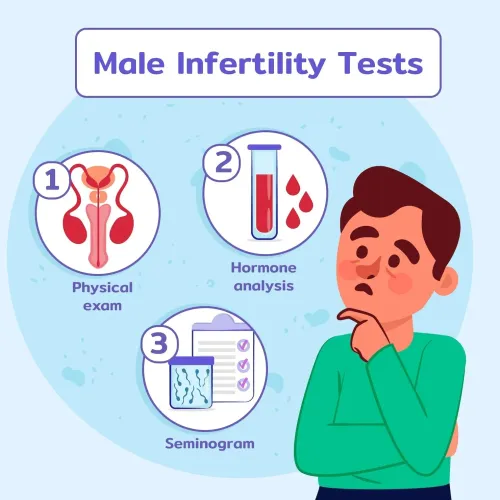
Both partners need assessment early because male factors contribute to about half of infertile couples. A semen analysis can identify a male-factor problem before months of female-only testing.
| Test | What it examines | Timing or use |
|---|---|---|
| Transvaginal ultrasound and antral follicle count | Uterus, ovaries, follicles and ovarian reserve | Often arranged early in the cycle |
| AMH test in infertility assessment | Ovarian reserve and expected stimulation response | Usually any cycle day |
| Day-2-to-5 FSH and estradiol | Hormonal ovarian assessment | Cycle days 2 to 5 |
| TSH | Thyroid function | Any day; follow clinic instructions |
| Ovulation assessment | Whether ovulation occurs and when | Depends on cycle length and method |
| Hysterosalpingography or sonohysterography | Whether the fallopian tubes are open and the uterine cavity is normal | Scheduled after bleeding ends and before ovulation |
| Semen analysis | Sperm count, movement and shape | Arrange early for the partner |
Prolactin is targeted to amenorrhea, oligomenorrhea, galactorrhea, or a related medicine or condition; it is not a routine test for every woman. AMH and antral follicle count estimate reserve, but a low result does not prove natural pregnancy is impossible.
Some blood tests require a cycle day, and selected tests require fasting. A complete plan can take two or more visits while results are reviewed.
How does the suspected cause change treatment?
Treatment should follow the suspected cause, not a generic fertility package. Confirmed ovulation with no major abnormality may lead to timed intercourse, ovulation tracking or selected IUI. For PCOS infertility, letrozole is usually considered first when semen and tubal factors are acceptable; do not start ovulation induction before checking those factors.
Thyroid or prolactin disorders require treatment of the underlying abnormality. Endometriosis, fibroids, uterine abnormalities, blocked tubes, diminished ovarian reserve and premature ovarian insufficiency each change counselling, urgency and referral. IUI eligibility usually requires at least one usable fallopian tube and suits selected unexplained, cervical-factor or mild male-factor cases.
Severe tubal disease or severe male-factor infertility may require IVF or sperm retrieval.
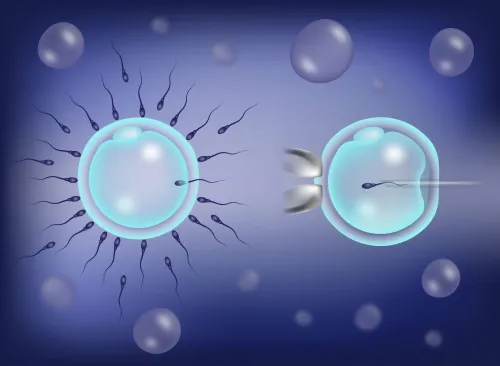
IVF for blocked fallopian tubes can bypass the tubes, but it cannot reverse age-related egg quality decline. ICSI for male factor infertility injects one sperm into one egg and is mainly considered for significant male-factor infertility, surgically retrieved sperm or a previous fertilisation problem, not automatically for every couple.
Ask for prompt reproductive-medicine referral when you have:
- Repeated failed ovulation induction or recurrent implantation failure
- Bilateral tubal blockage, severe pelvic pain or suspected advanced endometriosis
- Very low ovarian reserve or premature ovarian insufficiency
- Severe male-factor infertility or a previous fertilisation failure
- Fibroids or another uterine abnormality that may affect implantation
A maternity-centre consultation can start coordination, but these findings require a clear plan for specialist assessment rather than repeated basic cycles.
How should you compare a Moshi maternity centre with a fertility clinic?
A label does not tell you whether local care is sufficient. To compare a maternity centre and fertility clinic, ask whether the team can complete the investigation, treat both partners and provide a documented next step rather than simply offering antenatal care.
Ask the facility:
- Does a reproductive-medicine specialist review infertility cases?
- Are transvaginal ultrasound, cycle-day blood testing and tubal testing available in Moshi?
- Is sperm preparation available for IUI IVF ICSI availability, or must you travel?
- Is there an embryology laboratory for egg retrieval, fertilisation, embryo transfer and ICSI?
- What infection-prevention procedures and laboratory quality controls are used?
- Where are embryos stored, and what are the embryo storage arrangements?
- Who provides emergency cover after stimulation, egg retrieval or transfer?
- How are complications managed, and what referral links exist for surgery or advanced care?
Moshi fertility services may cover consultation, ultrasound and basic testing while requiring travel for procedures. Do not assume that a maternity centre performs egg retrieval, embryo transfer or ICSI.
| Check | Maternity centre | Fertility clinic |
|---|---|---|
| Investigation | Basic tests or referral | Coordinated fertility work-up |
| Treatment | Selected care or referral | IUI, IVF or ICSI when indicated |
| Continuity | Ask who reviews results | Confirm specialist follow-up and emergency cover |
Conceive IVF-IVF Centre, IVF Clinic in Hinjewadi, Wakad, Pune belongs in the comparison only after you verify its current location-specific services, diagnostic facilities, consultation pathway and referral arrangements. Also ask how the team explains age-specific pregnancy and live-birth expectations and coordinates both partners’ care.
Related services
Female Infertility Treatment Centre in Moshi Female Infertility Treatment Centre in Moshi,PCMC,Pune Conceive IVF,Fertility And Test Tube Baby Center is the Best Female Infertility Treatment Centre in Moshi, Chakan, PCMC and Pune. View service → |
IVF Counselling Centre in Moshi IVF Counselling Centre in Moshi,PCMC,Pune Conceive IVF,Fertility And Test Tube Baby Center is the Best IVF Counselling Centre, IVF Treatment Centre in Moshi, Chakan, PCMC and Pune. View service → |
What should you take to the appointment, and what are the treatment limits?
Your infertility appointment records should include a cycle calendar, pregnancy and miscarriage records, operation reports, pelvic-infection history, ultrasound scans, medication and supplement lists, prior hormone results and semen-analysis reports. Write down how long you have tried and whether intercourse is timed around ovulation.
The initial assessment can take several weeks because ultrasound, cycle-day blood tests, semen analysis and tubal testing rarely happen on one day. Ask which tests require cycle-day testing fasting, abstinence before semen analysis or a particular cycle date.
Before treatment, ask:
- What are the injection schedules and monitoring visits?
- How much discomfort should you expect from each procedure?
- What is the total cost, including medicines, laboratory work and travel?
- When can the clinic cancel a cycle, and what happens to your payment?
- Where will you go for emergency care?
| Plan | What it involves | Main limits |
|---|---|---|
| Timed intercourse | Intercourse planned around ovulation | Requires ovulation and usable tubes |
| IUI | Prepared sperm placed inside the uterus | Not suitable for severe tubal or male-factor infertility |
| IVF | Eggs are retrieved, fertilised and transferred as embryos | Invasive; IVF risks include ovarian hyperstimulation syndrome and multiple pregnancy |
Ask for live birth counselling that separates fertilisation, clinical pregnancy and live birth rates, using age-specific outcomes where available. Egg retrieval and embryo transfer are invasive, and treatment can cause substantial emotional strain; IVF does not guarantee a live birth.
If the facility cannot explain emergency management, laboratory standards or its referral route, obtain a reproductive-medicine second opinion before starting.
Frequently asked questions
Can a maternity centre in Moshi start an infertility evaluation?
Yes. A maternity centre can take your history, perform an examination, order basic tests and refer you to a fertility clinic. Confirm whether it provides infertility care or only antenatal, delivery and postnatal services.
What happens during a female-infertility work-up?
The clinician reviews your menstrual cycle, pregnancy history, medicines and previous conditions. Testing can include ovulation assessment, pelvic ultrasound, thyroid or prolactin blood tests, ovarian-reserve tests and fallopian-tube evaluation when indicated.
How does the suspected cause change treatment?
Treatment follows the suspected cause. Ovulation disorders may need medicines, blocked tubes may require surgery or IVF, endometriosis may need specialist management, and unexplained infertility may lead to timed intercourse, IUI or IVF after discussion.
How should you compare a Moshi maternity centre with a fertility clinic?
Ask whether the facility has fertility-trained clinicians, ultrasound and laboratory access, semen analysis, tubal testing, IUI or IVF referrals, written fees and a clear follow-up plan. Choose a fertility clinic when you need advanced testing or assisted reproduction.
What should you take to the appointment, and what are the treatment limits?
Take cycle dates, pregnancy and surgery records, test results, medication details and your partner’s health history. Ask which tests and treatments are available locally, which require referral, and when the centre will transfer your care.
Related services
IVF Treatment Centre in Moshi IVF Treatment Centre in Moshi,PCMC,Pune Conceive IVF,Fertility And Test Tube Baby Center is the Best IVF Treatment Centre in Moshi, Chakan, PCMC and Pune. View service → |
Surrogacy Centre in Moshi Surrogacy Centre in Moshi,PCMC,Pune Conceive IVF,Fertility And Test Tube Baby Center is the Best Surrogacy Centre in Moshi, Chakan, PCMC and Pune. View service → |