A gynecologist can begin a couple’s infertility evaluation, order initial tests and coordinate treatment, but male-factor findings often require a urologist or andrologist with reproductive expertise. You will be able to identify the right first appointment, prepare for semen testing and recognise when specialist referral or IVF with ICSI belongs in the plan.
Key takeaways
- Test both partners at the same time to identify male-factor infertility sooner.
- Request a semen analysis and repeat abnormal results through a fertility specialist.
- Review sperm count, concentration, motility, morphology, and semen volume.
- Choose a clinic that coordinates gynecological, andrology, laboratory, and ICSI care.
What can a gynecologist do for male infertility?
A gynecologist for male infertility can evaluate both partners at the start of care, take the male partner’s history, request a semen analysis and coordinate male infertility treatment. Both partners should attend the first appointment or begin testing at the same time; testing only the woman can postpone recognition of a male-factor problem.
The gynecologist’s review commonly covers:
- Timing and frequency of intercourse
- Previous pregnancies and attempts to conceive
- Genital infections, childhood testicular problems and fever
- Groin, testicular or other pelvic surgery
- Prescription medicines, testosterone, supplements and bodybuilding drugs
- Erections, ejaculation and libido
- Fertility goals and relevant medical conditions
A semen analysis is an essential starting test, but an abnormal result needs repeat testing because sperm measurements vary between samples. Follow the laboratory’s abstinence instruction, collect the entire ejaculate in its sterile container without lubricant or a regular condom, and deliver it within the stated time and temperature limits.
The male partner should also have a consultation with a urologist who treats male reproductive conditions or an andrologist when findings suggest a testicular, hormonal, obstructive or sperm-production problem. Referral is especially important for absent sperm, very low sperm numbers, testicular pain or a mass, suspected varicocele, abnormal hormones, or previous groin or testicular surgery.
A gynecologist may coordinate treatment and IVF planning, but that does not replace focused male-reproductive assessment.
What happens during a male fertility consultation and semen test?
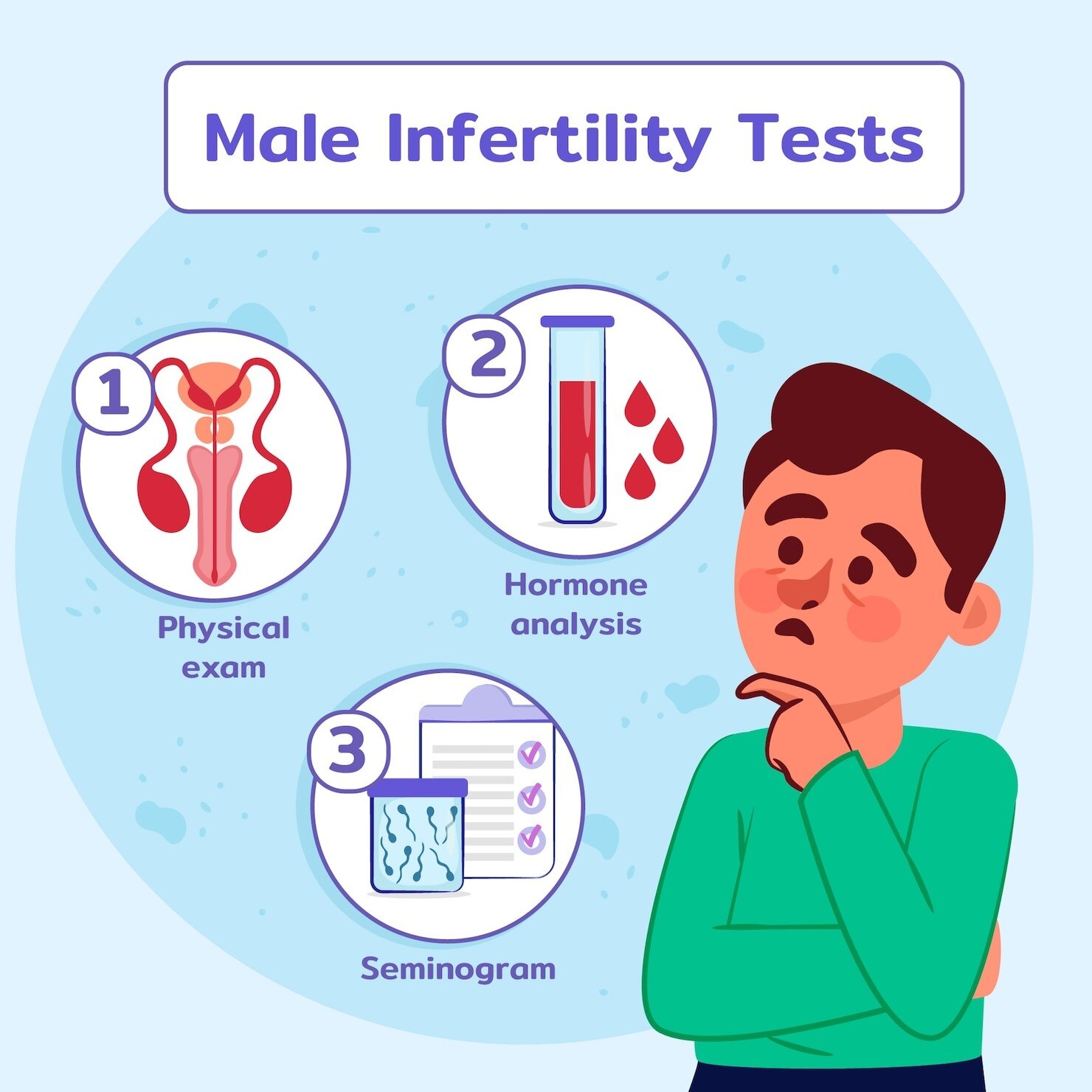
A male fertility consultation starts with a detailed history, a genital examination and a semen analysis. The clinician asks about:
| Consultation stage | What the clinician checks | What you should provide |
|---|---|---|
| Medical and reproductive history | Medical conditions, childhood testicular problems, fever, infections, fertility history, attempts to conceive, erections, ejaculation, libido and occupational exposures | Complete prescription, over-the-counter, bodybuilding drug, testosterone and supplement list |
| Physical examination | Testicular size, tenderness, masses and palpable veins that could indicate a varicocele | Report pain, swelling or previous groin and testicular surgery |
| Semen testing | Sperm production and semen characteristics | Follow the laboratory’s collection instructions |
The laboratory will give you a specific abstinence period. Follow that instruction instead of choosing your own number.
Collect the entire ejaculate in the sterile container. Do not use lubricant or a regular condom, record the collection time, and deliver the sample within the laboratory’s stated time and temperature limits. Tell the laboratory if any portion is lost.
An abnormal result needs another semen analysis because sperm measurements vary between samples; repeating it about one month later is a common guideline-based approach. Your partner’s age, ovulation, tubal status and medical history must be assessed at the same time, because evaluating only one partner can delay treatment.
Which semen results and follow-up tests matter?
A semen report must be read as a pattern, not a verdict based on one number. Compare every result with the laboratory’s reference method.
| Measurement | What it describes | Why it matters |
|---|---|---|
| Volume | Amount of semen fluid | A low amount can affect the total sperm delivered |
| Concentration | Sperm per millilitre | Shows density within the sample |
| Total sperm count | Sperm in the entire ejaculate | Combines concentration with volume |
| Motility | Sperm movement | Indicates how many sperm move |
| Progressive motility | Forward movement | Matters for reaching the egg |
| Morphology | Sperm shape and structure | Describes the proportion with typical form |
| Leukocytes | White blood cells | Elevated levels can point to inflammation |
A low result does not prove sterility, and a normal result does not guarantee pregnancy. An abnormal analysis needs clinical context and often a repeat sample because results vary.
Morning testosterone with FSH deserves attention when sperm production is poor, sperm are absent, testicles are small, libido or erections are impaired, or an endocrine disorder is suspected. LH or prolactin may follow those results.
Further testing depends on the findings:
- Scrotal ultrasound can assess a mass or clarify a suspected abnormality that examination cannot confirm.
- Post-ejaculatory urine testing investigates retrograde ejaculation.
- Karyotype and Y-chromosome-microdeletion testing may guide counseling and sperm-retrieval decisions in azoospermia or severe oligospermia.
- Infection testing belongs in the workup when symptoms, examination findings or medical history support it.
These results help select male infertility treatment; they do not replace a male-reproductive specialist’s assessment.
When does male infertility need specialist treatment or ICSI?
Ask for urology or andrology referral when semen contains no sperm, sperm numbers or movement are severely abnormal, a testicle is painful or enlarged, a varicocele is palpable, hormones are abnormal, or groin or testicular surgery may have affected the reproductive tract.
- Confirm whether the varicocele was felt during examination. Repair is clearest when infertility, abnormal semen parameters and a palpable varicocele occur together; an imaging-only varicocele is not generally repaired for infertility.
- Do not self-start testosterone. External testosterone suppresses pituitary signals and can markedly reduce or stop sperm production. Address fertility preservation with a male-reproductive specialist before using it.
- Establish whether azoospermia is obstructive or non-obstructive. Obstructive azoospermia can leave sperm production intact, allowing reconstruction or sperm retrieval from the epididymis or testis. Non-obstructive azoospermia reflects impaired sperm production and requires different counseling.
IVF treats the couple, not the male partner alone. Conventional IVF may use ejaculated sperm, while ICSI injects one sperm into an egg when sperm numbers or motility are very low, surgical retrieval is required, or previous fertilisation failed. ICSI is not automatic for every abnormal semen report.
The appropriate male infertility treatment depends on the cause, semen findings and both partners’ fertility factors. A gynecologist can coordinate IVF planning, but a male-reproductive specialist should assess conditions involving the testicles, hormones, sperm production or reproductive-tract obstruction.
How should you choose a local clinic for coordinated care?
A nearby clinic is useful only if it can coordinate male and female care. For a search such as gynecologist near me, check more than travel time: a gynecologist may start the workup, but male-factor findings can require a urologist with male-reproductive expertise or an andrologist. Begin both partners’ evaluations together.
Ask before booking:
- Does the clinic arrange semen analysis and repeat an abnormal result?
- Who reviews the semen report: the gynecologist, an andrologist or a male-reproductive urologist?
- Does it provide hormone testing and genetic evaluation when indicated?
- Where is genetic testing performed, and who explains the result?
- Does it coordinate ejaculation support, sperm retrieval and IVF or ICSI?
- Can both partners’ appointments be scheduled as one care plan?
| Care area | What happens | What to verify |
|---|---|---|
| Male partner | Evaluation, reversible-cause treatment, ejaculation support or surgical sperm retrieval | Which specialist performs each service |
| Female partner | Ovarian stimulation, egg retrieval and embryo transfer | Who manages these appointments |
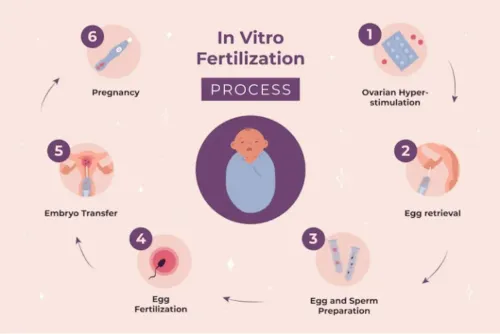
| Shared treatment | Sperm is used for conventional IVF or injected into an egg through ICSI | Who coordinates the laboratory and both partners |
The phrase ivf treatment for males in hinjewadi wakad can obscure this division: IVF treats the couple, not the male partner alone. Conceive IVF-IVF Centre, IVF Clinic in Hinjewadi, Wakad, Pune can be compared with other providers, but confirm its current male-factor services directly.
Do not substitute supplements for diagnosis; evidence for fertility vitamins and antioxidants remains uncertain before assessing varicocele, hormonal disease, obstruction, medication effects or genetic factors.
Related services
Male Infertility Treatment Centre in Nigdi,Akurdi,Chinchwad,PCMC,Pune Male Infertility Treatment Centre in Nigdi,Akurdi,Chinchwad,PCMC,Pune Conceive IVF,Fertility And Test Tube Baby Center is the Best Male Infertility Treatment Centre in Nigdi,Akurdi,Chinchwad,PCMC and Pune. |
Male Infertility Treatment Centre Male Infertility Treatment Centre in Hinjewadi,Wakad,PCMC,Pune Conceive IVF,Fertility And Test Tube Baby Center is the Best Male Infertility Treatment Centre in Hinjewadi,Maruji,Mahalunge,Kasarsai,Nerhe,PCMC and... View service → |
Frequently asked questions
What can a gynecologist do for male infertility?
A gynecologist can take the male partner’s history, request a semen analysis, assess both partners, and coordinate referral or treatment with an andrologist, urologist, or fertility team.
What happens during a male fertility consultation and semen test?
The consultation covers medical history, medications, surgeries, lifestyle, sexual health, and previous pregnancies. A semen test measures the sample after a specified abstinence period and checks sperm and semen characteristics.
Which semen results and follow-up tests matter?
Review semen volume, sperm concentration, total count, motility, morphology, and signs of infection. Abnormal results may require a repeat analysis, hormone tests, scrotal ultrasound, genetic testing, or specialist assessment.
When does male infertility need specialist treatment or ICSI?
Refer to a male infertility specialist for repeated abnormal semen results, azoospermia, severe oligospermia, erectile or ejaculation problems, varicocele, or suspected hormonal or genetic causes. ICSI may be considered when sperm numbers or movement are too low for standard IVF, or when previous fertilisation failed.
How should you choose a local clinic for coordinated care?
Ask whether the clinic tests both partners together, provides semen analysis, explains results, coordinates male infertility specialists, and offers IVF or ICSI when clinically appropriate. Confirm who performs each test and how abnormal results are followed up.
Related services
Male Infertility Treatment Centre inRavet,Punawale,Somatane Phata,PCMC,Pune Conceive IVF,Fertility And Test Tube Baby Center is the Best Male Infertility Treatment Centre in Ravet,Punawale,Kiwale,Somatane Phata,Gahunje,PCMC... |
Male Infertility Treatment Centre in Bhosari Male Infertility Treatment Centre in Bhosari,PCMC,Pune Conceive IVF,Fertility And Test Tube Baby Center is the Best Male Infertility Treatment Centre in Bhosari, Dighi, Charholi, Alandi, PCMC and Pune. View service → |
Male Infertility Treatment Centre in Moshi Male Infertility Treatment Centre in Moshi,PCMC,Pune Conceive IVF,Fertility And Test Tube Baby Center is the Best Male Infertility Treatment Centre in Moshi, Chakan, PCMC and Pune. View service → |
Male Infertility Treatment Centre Male Infertility Treatment Centre in Pimpri,Bhosari,PCMC,Pune Conceive IVF,Fertility And Test Tube Baby Center is the Best Male Infertility Treatment Centre in Pimpri,Bhosari,Alandi,Charholi,PCMC and Pune. |