The right first appointment depends on whether you need general reproductive care, a fertility evaluation or assisted reproduction. By comparing each doctor’s scope, timing, tests, treatment options and clinic support, you can choose care without assuming that IVF is automatically the next step.
Key takeaways
- Start with a gynecologist for routine reproductive care or uncomplicated initial concerns.
- Choose a fertility specialist when conception takes longer than expected or risk factors exist.
- Ask about ovulation tests, semen analysis, ultrasound, and tubal assessment before IVF.
- Compare clinic credentials, treatment explanations, laboratory standards, costs, and follow-up care.
What is the difference between an IVF specialist and a gynecologist?
A gynecologist manages women’s reproductive health broadly, while an IVF specialist focuses on infertility and assisted reproduction. Their roles overlap, but the titles are not interchangeable.
| Role | Main focus | Examples of care |
|---|---|---|
| Gynecologist | General reproductive and pregnancy health | Periods, contraception, abnormal bleeding, pelvic pain, pregnancy care, cervical screening, infections, fibroids and endometriosis |
| IVF specialist | Infertility and reproductive procedures | Infertility evaluation, ovulation treatment, IUI, IVF, embryo transfer and related procedures |
An IVF specialist is usually an obstetrician-gynaecologist with additional training in reproductive medicine. They may arrange semen analysis, ovarian-reserve assessment, tubal testing and ultrasound monitoring, then perform procedures such as egg retrieval or embryo transfer.
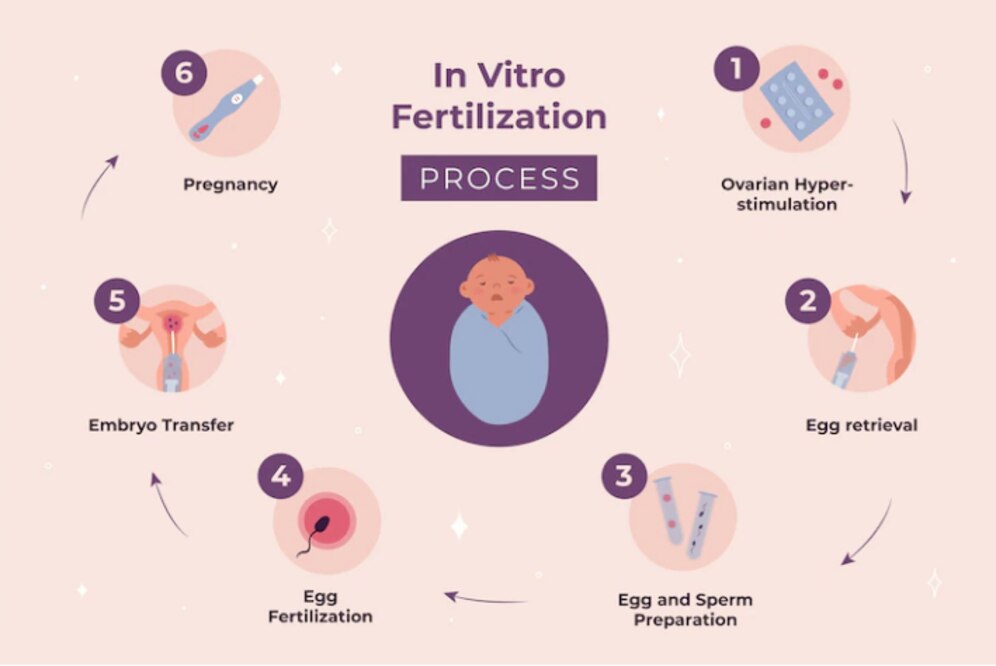
Titles alone do not prove expertise. Ask about infertility training, experience with the specific procedure you need, and access to a capable embryology laboratory. IUI places prepared sperm in the uterus; IVF requires stimulation, egg retrieval, laboratory fertilisation and embryo transfer, so laboratory skill matters directly to treatment.
The same doctor may provide both gynecologic and IVF care. Choosing an IVF specialist or gynecologist does not exclude the other: a gynecologist can manage pregnancy, infections, fibroids or general care while the fertility team manages stimulation, retrieval, transfer and embryology decisions. Clear responsibility and communication matter more than the label on the clinic door.
When should you start with a gynecologist or fertility specialist?
Start with a gynecologist for a current reproductive-health problem; start a fertility evaluation when conception has taken too long or a known risk requires earlier assessment. A gynecologist is also appropriate for:
- Abnormal bleeding, pelvic pain, suspected fibroids or endometriosis
- Vaginal infection, contraception or pregnancy concerns
- Cervical screening, preconception care or an initial assessment of irregular periods
After regular unprotected intercourse, seek fertility evaluation after 12 months when the female partner is under 35, after 6 months from age 35 to 39, and without waiting at age 40 or older. Both partners should be assessed, rather than postponing semen testing while only the woman receives care.
Arrange earlier fertility assessment for absent or very irregular ovulation, suspected blocked tubes, severe endometriosis, prior pelvic infection, recurrent miscarriage, previous ovarian surgery or chemotherapy, or known male-factor infertility. A partner with azoospermia or severe sperm abnormalities needs prompt evaluation.
Earlier referral does not automatically mean immediate IVF; it means identifying the cause before time or treatment options are lost.
Searches such as gynecologist in Hinjewadi Wakad and IVF specialist in Hinjewadi Wakad identify local providers, not different medical credentials. Check each clinician’s registration and fertility training, and ask whether the clinic evaluates both partners and has the expertise needed for your diagnosis.
What tests and treatments should come before IVF?
A complete first evaluation assesses both partners in parallel; an IVF specialist is unnecessary at the outset when a gynecologist can address a straightforward menstrual, ovulation, thyroid, prolactin, or structural problem.
- Record menstrual regularity, ovulation signs, prior pregnancies, miscarriages, deliveries, pelvic infections, surgeries, and previous fertility treatment.
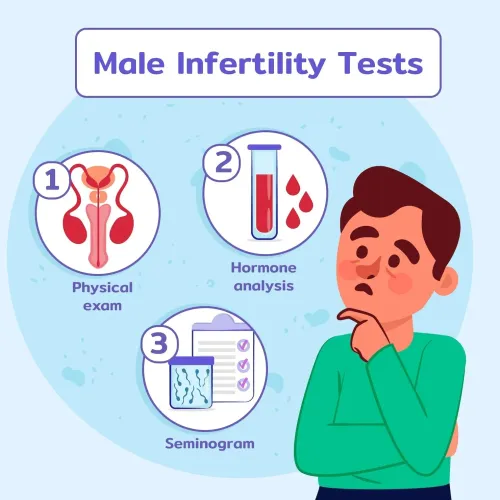
- Perform semen analysis early. Delaying this test while repeating investigations for the woman can miss male-factor infertility.
- Order thyroid testing when symptoms, irregular cycles, or medical history indicate it; check prolactin when ovulation is irregular or absent.
- Use AMH and antral follicle count when clinically useful to estimate ovarian response to stimulation. Neither test measures egg quality or guarantees natural conception or live birth.
- Assess the uterus with pelvic ultrasound and investigate the tubes with appropriate imaging or tubal-patency testing, such as hysterosalpingography or a specialist-guided alternative.
- Review prior reports and treatment records. Repeat a test only when its result is missing, unreliable, outdated, or needed for a specific decision.
Results may support timed intercourse, ovulation-induction medicine, correction of thyroid or prolactin disorders, selected surgery, or IUI. IUI places prepared sperm inside the uterus around ovulation; IVF involves stimulation, egg retrieval, laboratory fertilisation, and embryo transfer. ICSI injects one sperm into an egg during IVF, so it is not an automatic upgrade.
A fertility specialist in Hinjewadi becomes more useful when tubes are blocked, sperm abnormalities are substantial, ovarian reserve is markedly reduced, or simpler treatment has failed.
Which conditions justify earlier specialist care or shared care?
Earlier specialist care is justified when the likely problem affects sperm, ovarian response, tubes, or repeated pregnancy outcomes—not only when routine treatment has failed.
| Condition | Change in decision | What to discuss |
|---|---|---|
| Male-factor infertility | Refer promptly if semen analysis shows azoospermia or severe abnormalities; do not keep repeating tests on the woman alone. | Repeat semen testing when appropriate, urology input, sperm-retrieval options and ICSI if indicated |
| Reduced ovarian reserve | Low AMH or a low antral follicle count calls for an early conversation about time, expected response and available options. | These results estimate ovarian response; they do not prove that IVF will succeed or assess egg quality |
| Recurrent miscarriage | Assess the couple’s pregnancy history and order appropriate evaluation rather than recommending IVF automatically. | Review uterine factors, medical conditions, genetic considerations and prior records |
| Previous treatment failure | Reassess before starting another cycle, especially after failed IUI or IVF. | Ask what the cycle showed, which proposed change has a clear rationale and whether another diagnosis or laboratory issue needs review |
Severe endometriosis, blocked or absent tubes, substantial sperm problems, markedly reduced ovarian reserve or failed lower-complexity treatment can make assisted reproduction more relevant. Urgent referral still does not always mean immediate IVF.
Shared care can be practical. A gynecologist may continue managing pelvic disease, pregnancy care or general gynecology while the fertility team handles stimulation, retrieval, embryo transfer and embryology decisions. If you search for an ivf doctor near wakad, confirm who owns each decision and how the clinicians communicate.
How do you compare an IVF clinic or local doctor before booking?
A local search such as “ivf doctor near wakad” or “ivf specialist in hinjewadi wakad” identifies location, not a standard qualification. Before booking, verify the doctor’s medical registration and fertility-specific training, then ask:
- Who performs ultrasound scans, egg retrieval and embryo transfer?
- Are both partners evaluated, including semen analysis when appropriate?
- Which laboratory and embryology team handle fertilization, embryo culture and freezing?
- Who answers after hours if ovarian hyperstimulation syndrome or ectopic-pregnancy symptoms arise?
| Quoted measure | Ask what it means | Why it matters |
|---|---|---|
| Pregnancy rate | Does pregnancy mean a positive test? | A positive test can end in miscarriage. |
| Clinical pregnancy rate | Is an ultrasound-confirmed pregnancy counted? | This differs from a chemical pregnancy. |
| Live-birth rate | Is the figure based on births? | This is the outcome most patients need to compare. |
| Denominator | Is it per cycle started, egg retrieval or embryo transfer? | Different denominators can make results look incomparable. |
Request an individualized plan naming the suspected cause, tests still needed, least invasive reasonable option, escalation trigger and risks of multiple pregnancy, miscarriage and ectopic pregnancy. Conceive IVF-IVF Centre, IVF Clinic in Hinjewadi, Wakad, Pune belongs on the same checklist: assess its process and communication, not its location alone.
Treat a guaranteed baby, unexplained add-ons or IVF presented as the universal first answer as warning signs. A credible clinic explains indication, evidence, cost and risk before recommending each step.
Related service
IVF Consultant,IVF Specialist,IVF Doctor IVF Consultant,IVF Specialist,IVF Doctor in Hinjewadi,Wakad,PCMC,Pune ₹1000 Dr Madhuri Roy is a A Reliable and one of the Best IVF Consultant in Hinjewadi, IVF Expert in Hinjewadi, IVF Specialist in Hinjewadi, IVF Doctor in... View service → |
Frequently asked questions
What is the difference between an IVF specialist and a gynecologist?
A gynecologist manages broad reproductive and women’s health needs. An IVF specialist focuses on infertility evaluation, assisted reproduction, and treatments such as IUI, IVF, and ICSI.
When should you start with a gynecologist or fertility specialist?
Start with a gynecologist for routine reproductive care or an initial concern. Book a fertility specialist when conception has not occurred after an appropriate period of trying, or when medical history suggests reduced fertility.
What tests and treatments should come before IVF?
Evaluation can include ovulation assessment, pelvic ultrasound, semen analysis, and testing for open fallopian tubes. Treatment before IVF depends on the findings and can include timed intercourse, ovulation treatment, or IUI.
Which conditions justify earlier specialist care or shared care?
Seek earlier fertility care for irregular or absent periods, suspected endometriosis, blocked tubes, recurrent pregnancy loss, very low sperm counts, previous pelvic surgery, or known fertility-impacting conditions.
How do you compare an IVF clinic or local doctor before booking?
Compare the doctor’s relevant training, diagnostic approach, treatment explanations, laboratory arrangements, written cost estimates, medication guidance, consent process, and follow-up access.