A gynecologist can usually begin the fertility work-up, identify common causes, order first-line tests and decide when specialist treatment is justified. You will be able to prepare for the first consultation, understand what the results mean and judge whether timed intercourse, medication, IUI or IVF is the sensible next step.
Key takeaways
- Seek assessment after 12 months if under 35, or six months from age 35.
- Bring both partners’ medical histories, medications, test reports, and treatment questions.
- Ask which diagnosis, test result, or guideline supports each proposed treatment.
- Compare IVF timing with age, ovarian reserve, sperm findings, and previous treatment outcomes.
When should you see a gynecologist about fertility?
If you are under 35, book a fertility evaluation after 12 months of regular unprotected intercourse without pregnancy. If you are 35 or older, seek assessment after 6 months.
Do not wait for these thresholds if you have irregular or absent periods, suspected endometriosis, previous pelvic infection or surgery, recurrent miscarriage, erectile or ejaculation problems, or a known reproductive condition.
A gynecologist in Hinjewadi Wakad for fertility treatment decisions can begin the work-up before advanced treatment. At the first appointment, expect a review of your menstrual, pregnancy, medical and medication history, relevant symptoms, and previous reports. A pelvic examination is performed when indicated.
The clinician looks for possible ovulation, tubal, uterine, cervical, endocrine or male-factor problems and may order targeted first-line tests.
- Record your cycle dates, bleeding pattern, months of trying, pregnancies and miscarriages, and symptoms such as pelvic pain or ovulation changes.
- Bring ultrasound reports, hormone results, prescriptions, discharge summaries and operative notes from pelvic or testicular procedures.
- Ask whether the findings support timed intercourse, ovulation treatment or further testing, and when referral is appropriate.
A gynecologist Hinjewadi Wakad may provide this initial assessment, but the title alone does not prove that the doctor performs IVF. Referral to a reproductive endocrinologist or IVF specialist is the correct next step when treatment is complex or advanced assisted reproduction is being considered.
What should both partners bring to a fertility consultation in Pune?
Bring both partners, a cycle record, and every relevant medical report to a fertility consultation in Pune. The clinician will review menstrual, pregnancy, medical and medication history, discuss symptoms, and perform examinations when indicated.
Both partners should attend because semen analysis is a standard early test, and male factors contribute wholly or partly to about half of infertility cases.
- Record the first day of each menstrual period, cycle length, bleeding pattern, ovulation symptoms, pregnancy history and the number of months you have tried.
- Bring previous hormone results, pelvic ultrasound reports, HSG or HyCoSy reports, semen analyses, current and past prescriptions, relevant vaccination records, discharge summaries, and operative notes from pelvic or testicular procedures.
Expect a targeted work-up rather than every available test. It may include ovulation assessment, pelvic ultrasound, semen analysis, TSH when clinically indicated, and tubal-patency testing such as hysterosalpingography or HyCoSy.
AMH or antral follicle count can help estimate ovarian reserve and likely response to stimulation; AMH does not measure egg quality, diagnose infertility alone, or guarantee natural conception.
If a semen analysis is abnormal, ask whether it should be repeated because results vary between samples. Use the appointment to ask what each test will change, when results will be reviewed, and whether referral to a reproductive endocrinologist or IVF specialist is needed.
Who should lead each fertility treatment decision?
1. A gynecologist leads the initial history, examination, first-line testing, preconception care and treatment of conditions such as ovulatory disorders. They can begin with fertile-window timing or appropriate ovulation-induction medication, then refer you when advanced care is needed.
2. A reproductive endocrinologist or IVF specialist leads complex infertility planning, ovarian stimulation, egg retrieval and embryo transfer. Choose this specialist for decisions involving diminished ovarian reserve, blocked tubes or repeated treatment failure.
3. A fertility counsellor supports emotional coping, informed consent, expectations and communication. The counsellor does not diagnose infertility or prescribe treatment.
4. An embryologist explains fertilisation, embryo development, laboratory methods, freezing and embryo-transfer policies. Ask what happens to eggs, sperm and embryos at each laboratory stage.
5. An andrologist or urologist evaluates severe male-factor infertility, erectile or ejaculation problems, testicular disease and sperm-retrieval options. Treating the male-factor diagnosis can change the couple’s treatment plan.
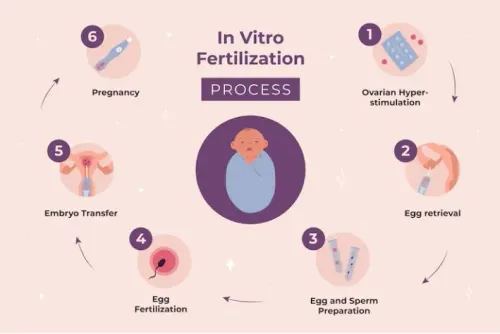
The treatment ladder may progress from fertile-window timing to ovulation-induction medication, IUI using prepared sperm, or IVF. IUI places prepared sperm inside the uterus around ovulation; IVF involves egg retrieval, laboratory fertilisation and embryo transfer.
Age, ovarian reserve, sperm results, tubal status, duration of infertility, previous treatment and your preferences determine the sequence. The phrase fertility treatment hinjewadi identifies a location search, not the right decision-maker, so ask who will lead each step and when referral is needed.
When is IVF sensible, and when is it too soon or too late to wait?
IVF is sensible when time-sensitive factors or a poor-prognosis problem make simpler treatment unlikely to work. It can be premature when a correctable ovulation disorder has not been treated, the evaluation is incomplete, or severe male-factor infertility has not been reviewed by an andrologist or urologist.
| Option | What it involves | When it may fit |
|---|---|---|
| Simpler treatment | Timed intercourse or ovulation medication | Ovulation problems with usable sperm and open tubes |
| IUI | Prepared sperm placed in the uterus around ovulation | Selected ovulation, unexplained or mild male-factor infertility |
| IVF | Eggs retrieved, fertilised in a laboratory, and an embryo transferred | Blocked tubes, markedly reduced ovarian reserve, severe sperm problems, or other poor-prognosis findings |
Delaying IVF can waste reproductive time when age is advancing, ovarian reserve is markedly reduced, both tubes are blocked, or severe sperm abnormalities occur alongside other poor-prognosis factors. IVF is more invasive, expensive and medically demanding than IUI, and stimulation carries risks including ovarian hyperstimulation syndrome and multiple pregnancy.
Ask for an individualised timeline covering:
- Expected live-birth chances for your age and findings
- Cancellation criteria and embryo-transfer policy
- Alternatives, medication risks and total costs
- The point at which referral or a treatment change is needed
Conceive IVF-IVF Centre, IVF Clinic in Hinjewadi, Wakad, Pune can be one local place to discuss that pathway, but “ivf treatment centre wakad” and “fertility treatment hinjewadi” are location searches, not proof of specialist accreditation or outcomes.
Related services
IVF Counselling Centre IVF Counselling Centre in Hinjewadi,PCMC,Pune ₹1000 Conceive IVF,Fertility And Test Tube Baby Center is the Best IVF Counselling Centre in Hinjewadi,Maruji,Mahalunge,Kasarsai,Nerhe,PCMC and Pune. View service → |
Female Infertility Treatment Centre Female Infertility Treatment Centre in Hinjewadi,Wakad,PCMC,Pune Conceive IVF,Fertility And Test Tube Baby Center is the Best Female Infertility Treatment Centre in... View service → |
How can you judge whether the recommended plan is sound?
A sound plan names the working diagnosis, shows the findings behind it, gives you a written treatment sequence, and states when referral to a reproductive endocrinologist or IVF specialist is needed. During a fertility consultation in Pune, ask how age, ovarian reserve, semen results and time trying change the proposed timeline.
Ask these questions before consenting:
- What specific indication supports each test or add-on? Routine immune testing, endometrial receptivity testing and other costly add-ons should not be presented as universal necessities; ask for evidence of benefit, price and possible harm.
- Have we reviewed folic acid, medication safety, vaccinations, smoking, alcohol, weight and chronic-disease control? Discuss genetic or infectious-disease testing when your history indicates it.
- What are the medication and procedure risks, total price, cancellation rules, embryo-storage period and embryo-transfer policy?
- Which outcome measure is reported: clinical pregnancy, ongoing pregnancy or live birth, and for which age group?
| Check before choosing a provider | Reassuring sign | Warning sign |
|---|---|---|
| Communication | Clear answers and time for questions | Pressure or vague promises |
| Consent and pricing | Written consent and itemised costs | Verbal-only fees or surprise charges |
| Results and laboratory practice | Defined outcome data and clear storage and transfer policies | One headline success rate with no context |
A gynecologist Hinjewadi Wakad search identifies location, not specialist accreditation or quality. The useful question is whether the clinician can explain your next decision and refer you at the right time—not promise IVF success.
Frequently asked questions
When should you see a gynecologist about fertility?
If you are under 35, seek an evaluation after 12 months of regular unprotected intercourse without pregnancy. At age 35 or older, seek assessment after six months. Book sooner for irregular or absent periods, suspected endometriosis, recurrent miscarriage, prior pelvic surgery, testicular problems, or a known fertility risk.
What should both partners bring to a fertility consultation in Pune?
Bring a timeline of how long you have tried, menstrual-cycle dates, previous pregnancies, miscarriages, surgeries, illnesses, medications, and supplements. Include semen-analysis reports, hormone tests, ultrasound scans, operative notes, and a list of questions. Both partners should attend because fertility factors can affect either person.
Who should lead each fertility treatment decision?
The gynecologist or fertility specialist should explain the diagnosis, treatment options, risks, alternatives, costs, and expected time commitment. You and your partner make the final decision after confirming that you understand the plan. Ask for a second opinion before treatment if the diagnosis or recommendation remains unclear.
When is IVF sensible, and when is it too soon or too late to wait?
IVF may be sensible for blocked fallopian tubes, severe male-factor infertility, some ovulation or endometriosis cases, failed lower-intensity treatment, or age-related time pressure. It may be too soon when a treatable cause has not been assessed or simpler treatment has a reasonable chance. Waiting becomes more costly in time as age rises or ovarian reserve is low, so ask how each month changes your options.
How can you judge whether the recommended fertility plan is sound?
Ask the clinician to connect every test and treatment to a specific finding, explain alternatives, state success measures, and provide a clear timeline. Check whether both partners were evaluated, whether risks and cancellation criteria are stated, and whether the plan includes what happens after one unsuccessful cycle.
Related service
IVF Treatment Centre IVF Treatment Centre in Hinjewadi,PCMC,Pune Conceive IVF,Fertility And Test Tube Baby Center is the Best IVF Treatment Centre in Hinjewadi,Maruji,Mahalunge,Kasarsai,Nerhe,PCMC and Pune. View service → |