An IVF counselling appointment usually starts with questions, records and an assessment of both partners—not an automatic recommendation to begin treatment. By the end of the visit, you should understand which tests are needed, which treatment options fit your circumstances, what IVF would involve, and which practical and financial questions remain.
Key takeaways
- Bring identification, medical records and details of previous fertility treatment.
- Expect questions about reproductive history before the doctor recommends IVF.
- Compare IVF with medicines, timed intercourse or IUI using your test results.
- Ask about success measures, risks, costs, timelines and consent before treatment.
What happens when you arrive for the first counselling appointment?
Registration comes first: provide identification, contact details and basic reproductive information, then review privacy and consent for history-taking, examination or tests. A useful ivf counselling appointment starts with understanding your situation, not choosing IVF immediately.
1. The gynecologist asks both partners how long you have tried to conceive, how often intercourse occurs, and whether erectile difficulty or ejaculation problems affect attempts. Bring both partners where applicable; male-factor infertility contributes to about half of infertile couples.
2. You will review menstrual regularity, cycle length and ovulation timing, along with previous pregnancies, miscarriages, ectopic pregnancies, pelvic infections, endometriosis symptoms, pelvic or abdominal surgeries, medical conditions, family history, medications and allergies.
3. Discuss previous fertility treatment, including ovulation medicines, insemination or IVF, and what happened. Bring semen analysis reports; AMH, FSH, LH, estradiol, TSH and prolactin results; ultrasound, HSG or hysteroscopy reports; operative notes; pregnancy records; and an up-to-date medication list.
4. The clinician checks the records, identifies missing information and explains whether you need an examination or tests such as ultrasound, semen analysis or tubal assessment. Ask why each test is needed and what it cannot show.
5. The final discussion sets out a tailored testing plan, possible treatment paths and follow-up timing. Fertility counselling hinjewadi wakad is more useful when both partners attend, but the first visit often ends with investigation planning—not an immediate IVF decision.
Which examinations and fertility tests might the gynecologist discuss?
The gynecologist may discuss imaging, blood tests, semen analysis and selected tubal or uterine tests. A fertility assessment Hinjewadi is a set of targeted assessments, not one test that proves whether IVF will succeed.
| Assessment | Designed to show | Cannot prove |
|---|---|---|
| Transvaginal ultrasound | Uterus, ovaries, fibroids, cysts, endometriosis-related findings and antral follicle count | Egg quality or IVF success |
| AMH; day-2-to-4 FSH | Expected response to stimulation and possible egg numbers | Egg quality or guaranteed pregnancy |
| Semen analysis | Sperm concentration, movement and shape | The complete explanation for infertility from one sample |
| HSG or contrast sonography | Whether the fallopian tubes are open and the uterine outline appears normal | Natural conception or IVF success |
| Hysteroscopy | The uterine cavity directly, including polyps, adhesions or some fibroids | Egg quality or tubal function |
Transvaginal ultrasound is often performed at the first visit if the clinician needs it and equipment is available; it is not automatic. Ask whether you need an empty bladder, avoid scheduling during heavy bleeding unless instructed, and follow directions about recent intercourse.
AMH and FSH help plan stimulation, but age remains a major predictor of reproductive potential. An abnormal semen result calls for repeat testing and, when needed, further male evaluation.
During an IVF consultation with a gynecologist, ask whether a pelvic examination is planned. It is not automatic; follow specific instructions about bladder filling, bleeding and recent intercourse.
How does the doctor choose between IVF and other treatments?
IVF is not the automatic next step. During an IVF consultation with a gynecologist, the decision combines age, duration of infertility, ovulation, ovarian reserve, tubal condition, uterine findings, sperm factors, endometriosis, previous treatment and your preferences.
| Option | What it does | When it fits |
|---|---|---|
| Timed intercourse | Uses the fertile window | Ovulation is regular and no major barrier is found |
| Ovulation-induction medicine | Supports egg release, with monitoring | Ovulation is irregular or absent |
| Surgery | Corrects a specific structural problem | A polyp, fibroid, endometriosis lesion or selected tubal problem affects fertility |
| Intrauterine insemination | Places prepared sperm inside the uterus | Ovulation is present, tubes are open and sperm or unexplained factors suit IUI |
| IVF | Fertilisation occurs in the laboratory | Both tubes are blocked or severely damaged, or selected male-factor or endometriosis-related problems justify it |
A normal tubal test does not make IVF necessary. A semen analysis belongs near the beginning of the work-up, because delaying male evaluation can waste time while female investigations continue.
- What is the diagnosis?
- Which option has a reasonable chance for us?
- How many cycles are appropriate?
- What would make you change the plan?
Shared decision-making matters in fertility counselling Hinjewadi Wakad: the doctor should explain likely benefit, effort, cost and alternatives before you choose.
What will the IVF plan, risks and practical commitments include?
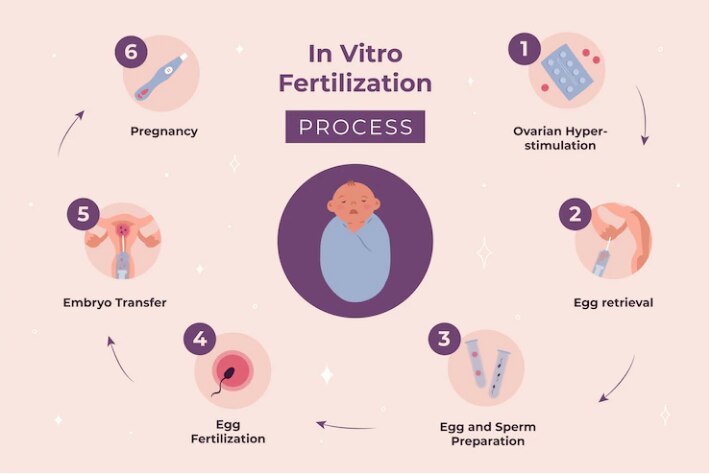
An ivf counselling appointment should map the cycle from injections to pregnancy testing. Ovarian-stimulation injections are followed by several ultrasound scans and blood tests, a trigger injection, egg retrieval under sedation or anaesthesia, laboratory fertilisation, embryo culture, and fresh transfer or freezing.
Plan for several visits over roughly two to three weeks, followed by pregnancy testing after transfer; your response determines the exact timetable.
Ask what happens if too few eggs are collected, fertilisation fails, embryos stop developing, or transfer is postponed. Discuss medication costs, time away from work, travel, injection timing, storage consent, future use of embryos, surplus-embryo decisions, and the clinic’s urgent contact instructions.
- Review OHSS, bleeding, infection, sedation complications, cycle cancellation and multiple pregnancy. Risk reduction can include an antagonist protocol, GnRH-agonist trigger, cabergoline or freeze-all when clinically appropriate; none guarantees that OHSS will not occur.
- Demand an individual estimate based on age, diagnosis, ovarian response, sperm factors, embryo number and quality, and fresh or frozen transfer. A clinic-wide pregnancy rate is not your probability.
| Option | Counselling point | Practical implication |
|---|---|---|
| Fresh transfer | Embryo transfer in the same cycle | May be postponed if the lining or OHSS risk is unsuitable |
| Frozen transfer | Embryo stored for a later cycle | Adds storage and later-cycle planning |
| Immune or endometrial receptivity testing | Limited or uncertain live-birth evidence for most patients | Ask for evidence, total cost and downsides before paying |
Single-embryo transfer can reduce multiple pregnancy; transferring more embryos is not a risk-free route to a healthy baby.
What should you ask before choosing a clinic in Hinjewadi or Wakad?
Compare answers, not labels such as “best.” During ivf counselling with a gynecologist in hinjewadi wakad, ask the same questions at every clinic, including Conceive IVF-IVF Centre, IVF Clinic in Hinjewadi, Wakad, Pune.
| Question | What to confirm |
|---|---|
| Who oversees and performs treatment? | Name the gynecologist overseeing your case, and ask who performs egg retrieval and embryo transfer. |
| Which tests are required? | Request the mandatory-test list, male-factor evaluation, and an explanation of each result in plain language. |
| What outcomes are realistic? | Ask for age-specific live-birth rates, not only pregnancy percentages. Ask whether the denominator is started cycles, retrievals, transfers or pregnancies. |
| What is the full cost? | Get an itemised estimate covering medicines, monitoring, anaesthesia, laboratory work, embryo freezing and storage. |
| How are risks managed? | Ask about single-embryo transfer, multiple-pregnancy prevention, OHSS planning and urgent contact instructions. |
| What happens to embryos? | Confirm consent for storage, future use and surplus-embryo decisions. |
| What happens after failure? | Ask what the clinic changes, reviews or tests after an unsuccessful first cycle. |
A useful ivf counselling appointment should leave you with a written diagnosis or working explanation, test list, treatment alternatives, expected timeline, costs, risks and a contact route for follow-up. If those details remain verbal or vague, postpone your decision and compare another clinic.
Related services
IVF Counselling Centre IVF Counselling Centre in Hinjewadi,PCMC,Pune ₹1000 Conceive IVF,Fertility And Test Tube Baby Center is the Best IVF Counselling Centre in Hinjewadi,Maruji,Mahalunge,Kasarsai,Nerhe,PCMC and Pune. View service → |
IVF Centre,IVF Clinic in Hinjewadi,Wakad,PCMC,Pune IVF Centre,IVF Clinic in Hinjewadi,Wakad,PCMC,Pune ₹1000 Conceive IVF,Fertility And Test Tube Baby Center is the Best IVF Centre in Hinjewadi, IVF Clinic in Hinjewadi, Infertility Centre in... View service → |
Frequently asked questions
What happens during the first IVF counselling appointment?
You provide identification and contact details, review consent and privacy, discuss your reproductive history, and explain previous tests or treatments. The gynecologist then outlines suitable next steps.
Which fertility tests might a gynecologist discuss?
The discussion can include ovulation assessment, ovarian reserve tests such as AMH, ultrasound, fallopian-tube evaluation, semen analysis and tests guided by your medical history.
How does a doctor choose between IVF and other fertility treatments?
The choice depends on factors such as age, duration and cause of infertility, ovarian reserve, tubal status, semen results, previous treatment and your preferences.
What should an IVF treatment plan explain?
Ask for the medication schedule, monitoring visits, egg retrieval, fertilisation method, embryo transfer, pregnancy testing, likely risks, possible cancellation and practical commitments.
What should you ask before choosing a clinic in Hinjewadi or Wakad?
Ask who provides counselling and treatment, which tests are done onsite, how consent and records are handled, what monitoring is included, how complications are managed and what the full cost covers.