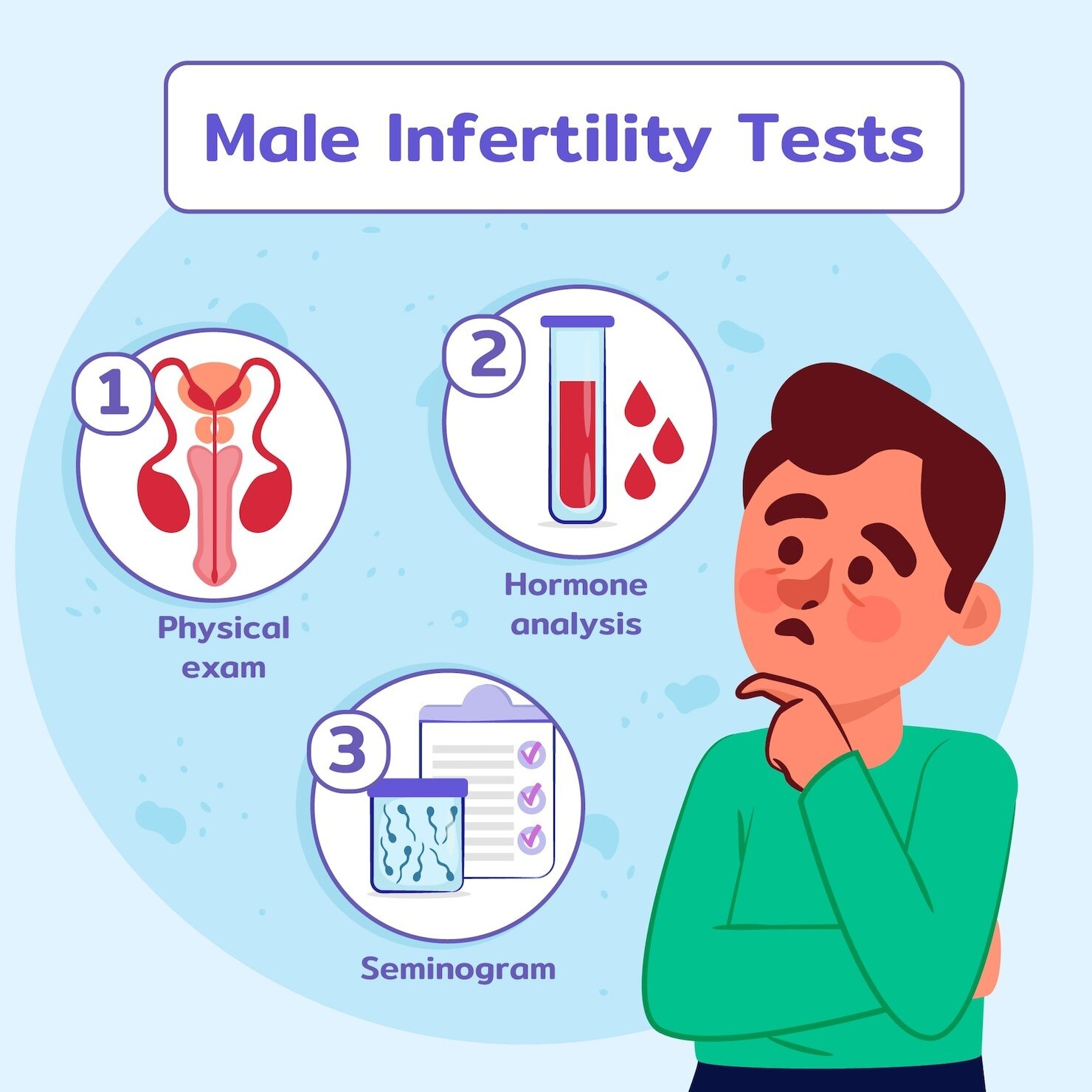
A gynecologist can coordinate a couple’s infertility evaluation, but male testing requires clear collection instructions and, when findings are abnormal, access to male-reproductive expertise. You will know what to ask at the first appointment, how to prepare for semen testing, how to read the main report values, and when further tests or a referral are justified.
Key takeaways
- Seek evaluation after 12 months without pregnancy, or sooner with specific risk factors.
- Avoid ejaculation for 2–7 days before semen collection.
- Review sperm concentration, motility, morphology, volume, and vitality.
- Repeat an abnormal semen analysis before choosing advanced tests or treatment.
When should you see a gynecologist for male infertility testing?
Begin male infertility testing after 12 months of regular, unprotected intercourse without pregnancy.
Start after 6 months when the female partner is 35 or older, and seek help sooner if either partner has a history that could affect fertility, such as prior pelvic or testicular surgery, chemotherapy, absent periods, erectile or ejaculation problems, or a previous fertility diagnosis.
Both partners should undergo assessment in parallel. Testing the woman first delays answers, because sperm production, ovulation, fallopian tubes, and the uterus can each affect the time to pregnancy. A gynecologist coordinates the couple’s male fertility evaluation alongside the female assessment.
A gynecologist near Bhosari may review the man’s medical and sexual history, check for obvious concerns, and arrange semen analysis. Ask before booking whether the doctor examines male patients directly. If the result or examination needs specialist expertise, expect an andrologist referral or referral to:
- A urologist experienced in male reproductive conditions
- An andrologist focused on sperm production and male fertility
- A male-fertility specialist who manages complex testing or sperm retrieval
Tell the clinician about prescribed or non-prescribed testosterone before testing. Testosterone taken from outside the body can suppress the hormones that drive sperm production and may sharply reduce or stop sperm production; it is not a fertility treatment for men trying to conceive.
How should you prepare for semen collection?
Use 2 to 7 days abstinence before collection. Record any ejaculation outside that window and follow the laboratory’s semen sample preparation instructions. Tell the clinician about fever, flu, COVID-19, or another significant illness in the previous 2–3 months; fever can temporarily reduce sperm production, so testing may need to wait or be repeated.
Disclose every medicine and supplement, including finasteride, dutasteride, opioids, anabolic steroids, vitamins, and herbal products. Do not stop prescribed treatment without medical advice. Report alcohol and cannabis use, too. Prescribed or non-prescribed testosterone can suppress sperm production and is not a fertility treatment for someone trying to conceive.
Follow these semen collection instructions:
- Wash your hands and penis, then dry thoroughly.
- Collect the entire ejaculate by masturbation directly into the laboratory’s sterile, semen-approved container.
- Do not use a household jar, regular condom, saliva, lubricant, or spermicide. Tell staff if any portion, especially the first fraction, is missed.
Clinic collection avoids transport delays and temperature changes. For off-site collection, confirm the deadline before leaving.
| Option | What to do | Main risk |
|---|---|---|
| Clinic collection | Produce the sample in the designated room | Privacy or anxiety can make collection difficult |
| Off-site collection | Deliver within the laboratory’s stated time, usually within 60 minutes | Delay can reduce motility |
| Either method | Keep the container near body temperature; do not refrigerate, freeze, or overheat it | Cold or heat can damage sperm |
Label the container as instructed and complete the semen sample transport form.
What does a semen analysis report actually show?
A semen analysis report measures how much semen was produced, how many sperm it contains, how they move, and whether they appear structurally normal. WHO semen reference values are lower fifth-percentile findings from men whose partners conceived within 12 months, not a pass/fail boundary for fertility.
| Measure | What it shows | WHO 6th-edition reference |
|---|---|---|
| Semen volume | Fluid released in the ejaculate | 1.4 mL or more |
| Sperm concentration | Sperm per millilitre | 16 million/mL or more |
| Total sperm number | Sperm in the entire ejaculate | 39 million or more |
| Progressive motility | Sperm moving forward effectively | 30% or more |
| Total motility | Progressive, non-progressive, and moving sperm combined | 42% or more |
| Sperm morphology | Percentage with a normal shape under strict criteria | 4% or more |
| Vitality | Percentage of live sperm, including those that do not move | 54% or more |
| pH | Acidity or alkalinity of semen | 7.2 or higher |
| Round cells | Immature sperm cells or white blood cells | Investigate white cells at 1 million/mL or higher |
| Agglutination | Sperm stuck to other sperm | Reported by presence and grade; no single fertility cutoff |
Low sperm motility, concentration, or morphology can reduce the chance of natural conception, but one abnormal result is not a diagnosis. Values vary between ejaculates, so a repeat sample is commonly requested about a month later, alongside the medical history and examination. A normal report also does not guarantee fertility.
Which tests come after an abnormal semen result?
The next step is a targeted evaluation, not every available test. The clinician reviews prior testicular injury or surgery, undescended testis, infections, chemotherapy, medicines, anabolic steroids or prescribed testosterone, libido, erections, ejaculation, and fertility timing, then examines testicular size, the vas deferens, epididymis, and palpable varicocele.
Order tests according to the findings:
- Male infertility hormone tests are most relevant with azoospermia, oligozoospermia, small testes, low libido, erectile dysfunction, or suspected endocrine disease. Draw morning total testosterone, then add FSH, LH, and prolactin to distinguish testicular failure from pituitary or medication-related suppression. Tell the clinician about testosterone use; it can stop sperm production.
- Urinalysis, urine culture, or STI testing applies when burning, discharge, urinary symptoms, inflammation, or infection exposure is present.
- Scrotal ultrasound for infertility is selective, not automatic. Use it when examination is inconclusive or suggests a mass, obstruction, testicular abnormality, or clinically significant varicocele.
- Karyotype testing is relevant with azoospermia or very severe sperm deficiency suggesting impaired sperm production. Y-chromosome microdeletion testing is relevant in severe oligozoospermia or non-obstructive azoospermia, especially before surgical sperm retrieval.
| Test | What it adds | When it applies |
|---|---|---|
| Sperm DNA-fragmentation | Assesses genetic damage in sperm | Recurrent pregnancy loss or repeated assisted-reproduction failure |
| Antisperm antibodies | Detects antibody binding to sperm | Specific clinical circumstances, not routine first-line testing |
Neither test replaces semen analysis, history, examination, or indicated hormone and genetic testing.
How do you choose the next step after testing near Bhosari?
An abnormal semen analysis is a snapshot, not a verdict. Because ejaculates vary, an abnormal result is commonly checked with a repeat semen analysis about a month later. This helps distinguish a persistent pattern from temporary effects such as fever, illness, or collection variation. Do not treat one report as proof of infertility.
| Finding | Next step | Why it matters |
|---|---|---|
| Palpable varicocele, infertility, and abnormal semen parameters | Discuss repair with a male-reproductive specialist | These findings together can justify treatment while you are trying to conceive |
| Varicocele seen only on ultrasound | Do not assume surgery is needed | An imaging-only varicocele is not routinely repaired |
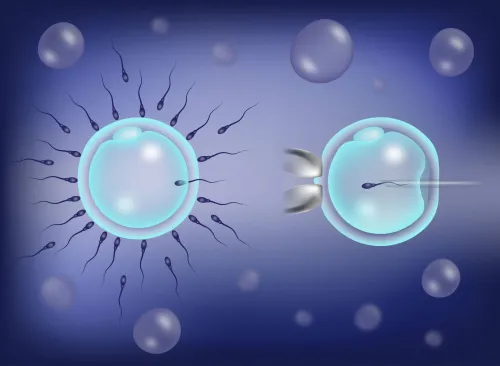
| Very few motile sperm or azoospermia | Discuss ICSI for male infertility and sperm retrieval options | ICSI can use tiny numbers of motile sperm, including sperm retrieved surgically in selected cases |
Ask the local clinic whether its gynecologist coordinates both partners’ care, examines male patients directly, and arranges referral to a urologist, andrologist, or male-fertility specialist when needed. At Conceive IVF-IVF Centre, IVF Clinic in Hinjewadi, Wakad, Pune, ask who reviews the male results and who performs or coordinates referral decisions.
ICSI can bypass a severe sperm problem, but it does not cure the cause. Counseling should still cover hormones, obstruction, varicocele, genetic implications, sperm-retrieval prospects, and the female partner’s age-related fertility factors.
Related services
Male Infertility Treatment Centre in Bhosari Male Infertility Treatment Centre in Bhosari,PCMC,Pune Conceive IVF,Fertility And Test Tube Baby Center is the Best Male Infertility Treatment Centre in Bhosari, Dighi, Charholi, Alandi, PCMC and Pune. View service → |
Sperm Analysis Centre in Bhosari Sperm Analysis Centre in Bhosari,PCMC,Pune Conceive IVF,Fertility And Test Tube Baby Center is the Best Sperm Analysis Centre in Bhosari, Dighi, Charholi, Alandi, PCMC and Pune. View service → |
Frequently asked questions
When should you see a gynecologist for male infertility testing?
Begin testing after 12 months of regular, unprotected intercourse without pregnancy. Seek care sooner if you have testicular injury, prior infertility, sexual or ejaculation problems, chemotherapy exposure, or known reproductive conditions.
How should you prepare for semen collection?
Avoid ejaculation for 2–7 days, wash your hands and genitals, collect the entire sample in the laboratory container, and keep it close to body temperature. Deliver it within the laboratory’s stated time limit and report any spillage.
What does a semen analysis report actually show?
It reports semen volume, sperm concentration, total sperm number, motility, progressive motility, morphology, vitality, and sometimes pH or white blood cells. Compare the values with the laboratory’s reference ranges rather than focusing on one number.
Which tests come after an abnormal semen result?
Repeat the semen analysis first because results vary between samples. Depending on the findings and examination, a clinician may order hormone tests such as FSH and testosterone, a scrotal ultrasound, urine testing, genetic tests, or specialised sperm testing.
How do you choose the next step after testing near Bhosari?
Choose based on the repeated semen results, medical history, physical examination, female-partner factors, and pregnancy goals. Ask the clinic which findings require treatment, referral to a urologist or andrologist, or assisted reproductive options.