Your first visit should produce a reasoned fertility plan, not an automatic recommendation for IVF. Knowing which records to bring, which tests matter for both partners and how to compare treatment options will help you consent to care with clearer expectations.
Key takeaways
- Bring both partners’ medical records, medication lists, and previous fertility test results.
- Ask how ovarian reserve, semen analysis, age, and diagnosis affect treatment order.
- Request a written IVF cycle plan covering medicines, monitoring, risks, and cancellation criteria.
- Compare clinic laboratory standards, doctor access, consent forms, and itemised treatment costs.
What happens at your first appointment with an IVF specialist?
Your first IVF consultation is an infertility assessment, not an automatic decision to start IVF. An IVF specialist in Bhosari reviews both partners and builds an infertility history before recommending tests or treatment.
Expect questions about:
- How long you have been trying, menstrual-cycle length and regularity, and signs of ovulation
- Pelvic pain, unusual bleeding, previous pregnancies or miscarriages, surgeries and medical conditions
- Medicines, allergies and family history
- Sexual frequency, intercourse timing, pain, erectile or ejaculatory problems and previous contraception
Sexual history matters because intercourse timing, sexual difficulties and contraception can change the work-up. The discussion should occur privately, with consent explained before any examination. An examination is performed only when it could answer a clinical question.
The appointment should end with a staged plan tailored to your history. It may include semen analysis, ovarian-reserve tests such as AMH and antral follicle count, ovulation assessment, tubal-patency testing and uterine imaging.
Semen analysis is essential even when the initial concern appears to be female infertility because male-factor infertility contributes substantially to infertility. A result showing low count, movement or abnormal shape is commonly repeated; sperm measurements vary between samples, so one abnormal report should not alone determine treatment.
Which records and test results should you bring?
Bring your IVF medical records in a dated folder, preferably with cycle day recorded. Include:
| Record | What it helps assess |
|---|---|
| Semen analysis report | Sperm count, movement and shape; attach repeat reports |
| AMH test and antral-follicle-count results | Expected ovarian response |
| TSH and prolactin fertility tests | Thyroid or prolactin-related ovulation problems |
| Pelvic ultrasound reports | Uterus, ovaries, cysts and endometrial lining |
| Operative notes, laparoscopy or hysteroscopy findings | Tubal, endometriosis or uterine findings |
| Genetic reports and discharge summaries | Inherited risks and previous hospital care |
| Medication list and allergy records | Current treatment and safety risks |
Also bring previous IVF stimulation charts showing drug names, doses, monitoring scans and estradiol results. Add egg-retrieval notes, fertilisation or ICSI records, embryo-development reports, embryo-transfer summaries, freezing and storage records, and pregnancy-test results.
If another clinic holds the IVF medical records, ask for copies before travelling. Include the test date and cycle day wherever available; an old result without timing can be difficult to interpret.
AMH and antral follicle count estimate ovarian response and the risk of retrieving few or many eggs. They do not measure egg quality or guarantee pregnancy. Age remains a major factor in embryo competence and live birth, so interpret ovarian-reserve results alongside age and the full clinical history.
How does the specialist decide which treatment comes first?
The specialist starts with the least invasive option that fits your age, test results and time trying to conceive—not automatically with IVF. Normal ovulation, open tubes, reassuring sperm and suitable age may support no immediate treatment with timed intercourse.
| Option | When it comes first | What changes the sequence |
|---|---|---|
| Timed intercourse | Ovulation and sperm are adequate, tubes are open | Waiting becomes less suitable as age, duration or ovarian reserve worsens |
| Ovulation induction | Ovulation is irregular, including with PCOS | Monitoring is needed; avoid unnecessary stimulation when ovulation is already regular |
| IUI | Ovulation is present, at least one tube is open and sperm impairment is mild | Poor sperm quality or blocked tubes shifts the choice toward IVF |
| Surgery | A blocked tube, uterine-cavity problem, relevant fibroid, endometriosis or another correctable finding is present | Treat only a finding likely to improve fertility or safety |
| IVF | Tubal disease, reduced ovarian reserve, severe endometriosis, significant sperm impairment, prolonged unexplained infertility or prior outcomes justify it | Age, low reserve and failed cycles can make delay costly |
| Donor eggs or sperm | The couple’s medical circumstances require donor gametes | Discuss medical, legal and genetic implications before treatment |
Age and ovarian reserve influence how long you can test IVF alternatives. Severe endometriosis, fibroids, recurrent miscarriage, sperm quality and prior cycles may require additional evaluation or move IVF earlier. Ask specifically about IUI versus IVF in Bhosari and the evidence for the proposed order.
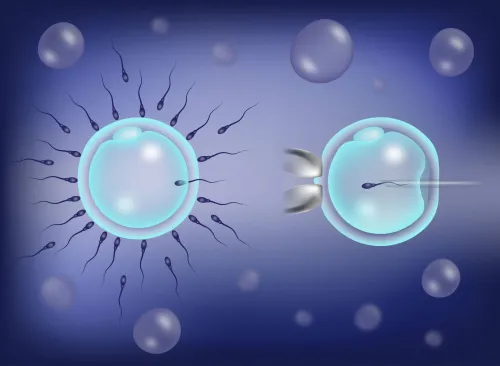
ICSI is not automatically superior to conventional IVF. It is mainly considered for severe male-factor infertility, surgically retrieved sperm, previous very low fertilisation or previously frozen oocytes.
Ask what evidence supports the recommendation, what happens if you wait, choose a less invasive option or decline an add-on such as PGT-A, and what outcome would trigger a change.
What happens during an IVF cycle, and what risks need planning?
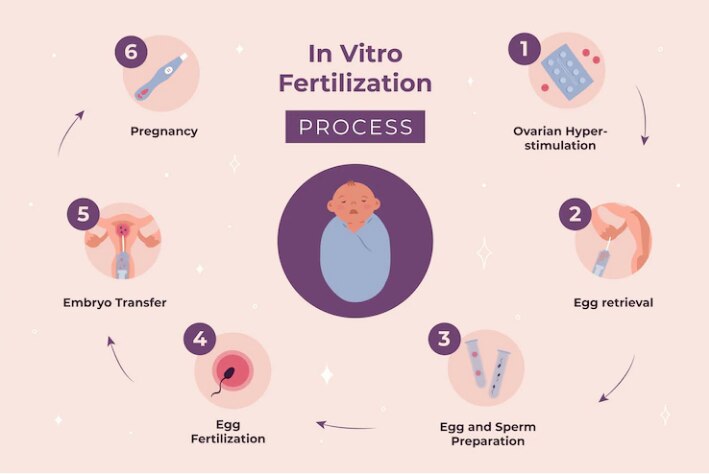
An IVF cycle steps through medication, monitoring, retrieval, fertilisation and embryo transfer; the transfer does not always happen in the retrieval cycle.
1. Daily ovarian-stimulation medicines recruit several follicles. Ultrasound scans and blood tests track follicle growth, estradiol and progesterone. When follicles are ready, a trigger injection times egg maturation and retrieval.
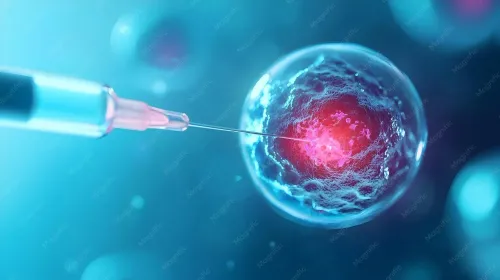
2. Egg retrieval uses a needle guided through the vagina, with anaesthesia or sedation. The laboratory then uses conventional insemination or ICSI, which injects one sperm into each mature egg.
3. Embryos remain in culture while the embryology team records fertilisation and development. PGT-A screens embryos for selected chromosome-number differences; it is not a guarantee of implantation, healthy birth or a baby without genetic disease. Question unproven add-ons and ask what evidence supports them.
4. Discuss fresh versus frozen embryo transfer. Transfer may be delayed when progesterone rises, the uterine lining is unsuitable, PGT-A is planned or a freeze-all approach lowers medical risk. The clinic will give you the pregnancy-test date; follow that date rather than testing early.
5. Ask whether single-embryo transfer suits your age, embryo quality and history. Twins and higher-order multiples raise the risks of preterm birth, hypertension and gestational diabetes.
Ovarian hyperstimulation syndrome is a complication, with higher risk from PCOS, high AMH, many follicles, high estradiol or a large egg yield. After retrieval or transfer, urgently contact the clinic for severe swelling or pain, persistent vomiting, breathlessness, faintness, reduced urine or rapid weight gain.
What should you compare before choosing an IVF clinic in Bhosari?
A useful IVF clinic comparison starts with named people, measurable outcomes and written contingencies—not a headline percentage. Ask who performs monitoring scans and egg retrievals, who provides anaesthesia, who supervises the embryology laboratory, and how the doctor and laboratory communicate.
| Area | Ask the clinic | Why it matters |
|---|---|---|
| Clinical continuity | Who handles scans, retrieval, counselling and emergencies outside appointments? | You need a clear contact if pain, bleeding or OHSS symptoms occur after hours. |
| Laboratory coordination | Who supervises embryology, and how are identity, gamete and embryo records protected? | Confirm ART clinic registration India under the Assisted Reproductive Technology (Regulation) Act, 2021. |
| Outcomes | Provide live birth per started cycle, retrieval and transfer, separated by age and diagnosis. | IVF success rates are more useful with a denominator and named outcome than an unexplained positive-test percentage. |
Before consenting, request:
- The proposed protocol, alternatives, medication schedule, monitoring frequency, transfer plan and cancellation criteria.
- The plan if few eggs are retrieved, fertilisation fails or no transferable embryos develop.
- An IVF treatment cost estimate itemising medicines, tests, anaesthesia, retrieval, ICSI, freezing, storage, genetic testing, frozen transfer and complications.
- Written explanations of reports, counselling arrangements and emergency cover.
This checklist lets you assess whether Conceive IVF-IVF Centre, IVF Clinic in Hinjewadi, Wakad, Pune provides the continuity, laboratory coordination and treatment documentation you need for care connected with Bhosari.
Related service
IVF Consultant,IVF Specialist,IVF Doctor in Bhosari IVF Consultant,IVF Specialist,IVF Doctor in Bhosari,PCMC,Pune Dr Madhuri Roy is a A Reliable and one of the Best IVF Consultant, IVF Expert, IVF Specialist, IVF Doctor in Bhosari, Dighi, Charholi, Alandi, PCMC... View service → |
Frequently asked questions
What happens at your first appointment with an IVF specialist?
The specialist reviews both partners’ infertility history, previous pregnancies, menstrual details, medical conditions, medicines, and prior treatment before recommending tests or treatment.
Which records and test results should you bring?
Bring previous ultrasound reports, AMH and other hormone results, semen analysis reports, fallopian-tube test results, operative notes, pregnancy records, prescriptions, and a list of current medicines.
How does the specialist decide which treatment comes first?
The plan depends on both partners’ findings, including age, ovarian reserve, ovulation, tubal status, sperm results, duration of infertility, and previous treatment outcomes.
What happens during an IVF cycle, and what risks need planning?
An IVF cycle involves ovarian stimulation, monitoring, egg retrieval, fertilisation, embryo culture, and embryo transfer or freezing. Planning should address medication side effects, ovarian hyperstimulation syndrome, bleeding, infection, multiple pregnancy, and cycle cancellation.
What should you compare before choosing an IVF clinic in Bhosari?
Compare the clinic’s consultation process, laboratory facilities, embryology team, monitoring arrangements, emergency access, consent documents, treatment inclusions, and itemised costs.